
Why Knowing Your Car’s Market Value Can Save You Thousands
Using a car market value calculator is the fastest way to find out what your vehicle is actually worth before you sell, trade in, or negotiate.
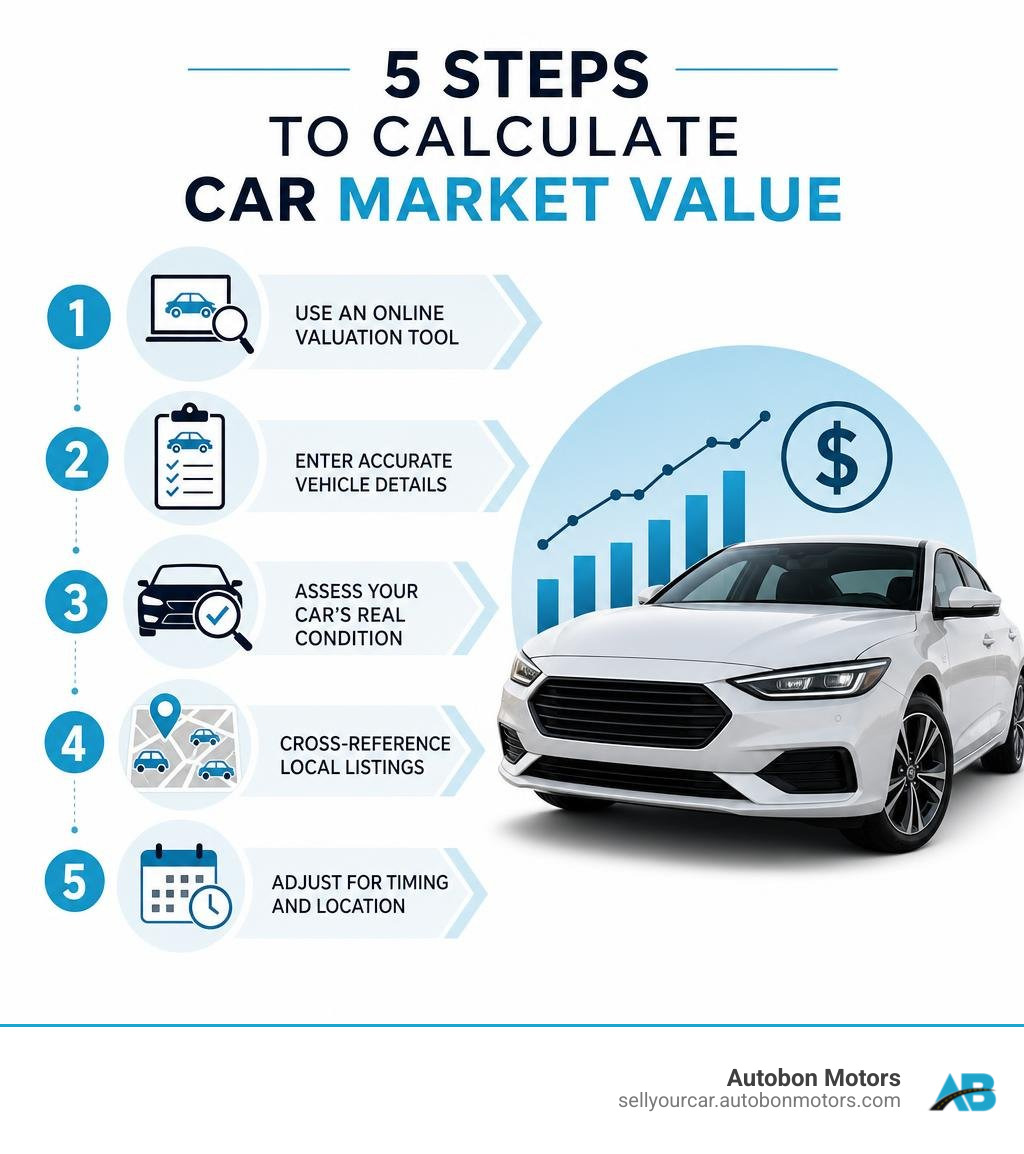
Here’s how to calculate your car’s market value in 5 steps:
- Use an online valuation tool to get a baseline estimate from reputable pricing data
- Enter accurate vehicle details – year, make, model, trim, mileage, and VIN
- Assess your car’s real condition – be honest about dents, wear, and mechanical issues
- Cross-reference local listings – compare similar vehicles for sale near you
- Adjust for timing and location – season and regional demand both affect price
Most South Florida car owners don’t realize their vehicle’s value can swing by thousands of dollars depending on where, when, and how they sell. A dealer might offer one number. An online tool shows another. A private buyer quotes something completely different.
That gap isn’t random – it’s the result of different data sources, local market conditions, and the type of sale you’re making.
The good news? You don’t need to be a car expert to figure out what your car is actually worth. You just need the right process.
I’m Marcos Bravo, a South Florida automotive sales and marketing professional with over 25 years of experience in the luxury and exotic vehicle market – and I’ve used every major car market value calculator category available to help clients make smarter buying and selling decisions. In this guide, I’ll walk you through exactly how these tools work and how to get the most accurate number for your vehicle.
How Does a Car Market Value Calculator Work?
If you have ever typed your license plate into an online portal and watched a dollar figure pop up instantly, you might have wondered if there is a tiny wizard behind the screen doing rapid math. In reality, a modern car market value calculator relies on massive databases, real-time transaction tracking, and complex mathematical algorithms to estimate what buyers are currently paying for a vehicle like yours.

When we use these tools, we are tapping into a live, breathing marketplace. The software doesn’t just guess; it constantly pulls from actual wholesale auction results, local retail listings, and historic dealership transaction records. By looking at what thousands of identical cars sold for yesterday, the calculator can deliver a highly accurate estimate of what your car is worth today.
Understanding the Core Algorithm
At the heart of every online valuation tool is a pricing algorithm designed to digest millions of data points. Different platforms rely on different primary sources to build their algorithms:
- Wholesale auction data: Many professional dealership pricing systems rely on current wholesale auction results and retail transaction trends, updating pricing frequently to reflect real-time market shifts.
- Long-term pricing guide data: Established valuation guides analyze large volumes of transaction data, including dealer sales, auction prices, and private transactions, while adjusting values for local market conditions across many geographic regions.
- Live listing data: Listing-based tools analyze active vehicle listings to estimate what similar cars are being advertised for right now.
- AI-assisted marketplace data: Newer valuation systems use automated data analysis and live marketplace comparisons to generate instant estimates.
These algorithms weigh factors like historical depreciation, regional supply and demand, and economic trends to calculate a baseline figure.
Trade-In vs. Private Party vs. Retail Value
One of the most common points of confusion for sellers is why a single car market value calculator will show three completely different prices for the exact same vehicle. These numbers represent different transaction methods, each with its own financial realities:
| Value Type | What It Represents | Pros | Cons |
|---|---|---|---|
| Trade-In Value | What a dealership will pay you for your car, usually to apply toward another purchase. Aligns closely with wholesale auction prices. | Extremely fast, convenient, and may offer tax advantages on your next purchase. | Typically the lowest offer because the dealer must cover reconditioning and overhead. |
| Private Party Value | The price you can expect when selling your car directly to another individual consumer. | Usually higher than trade-in value, falling right between wholesale and retail. | Requires significant effort, listing fees, meeting strangers, and handling paperwork yourself. |
| Retail Value | The price a dealership asks when selling the car on their lot to a consumer. | Represents the maximum market ceiling for the vehicle’s price. | You cannot realistically get this price as a private seller because you cannot offer warranties or financing. |
Key Factors That Determine Your Vehicle’s Worth
To get an accurate estimate from any car market value calculator, we have to look closely at the specific variables that dictate how vehicles depreciate over time. While some brands naturally hold their value better than others, every vehicle is subject to a few universal laws of depreciation.
How Condition, Mileage, and Location Affect Estimates
Three major pillars determine where your vehicle lands on the valuation spectrum:
- Vehicle Condition: This is where subjectivity often gets in the way of accuracy. Most owners believe their car is in “Excellent” condition, but in reality, less than 5% of used cars truly fit this description. Most vehicles fall into the “Good” or “Fair” categories due to normal wear and tear, minor cosmetic blemishes, and tire wear.
- Mileage: Your odometer is a direct indicator of remaining engine life. High mileage naturally depresses value, while low mileage can significantly boost an estimate. Calculators typically assume an average of 12,000 to 15,000 miles driven per year.
- Location and Climate: Where you live has a massive impact on what your car is worth. In South Florida, for instance, we experience high demand for fuel-efficient sedans, convertibles, and spacious SUVs, while heavy-duty snow-ready vehicles are less sought after. Furthermore, coastal areas like Fort Lauderdale and Miami can expose cars to salty ocean air, making rust prevention and paint care critical to maintaining value.
The Role of Vehicle History Reports
A clean history report is worth its weight in gold. When a dealer or a savvy private buyer looks at your vehicle, they will run a report through services like CARFAX.
CARFAX combines information from more than 20 European countries plus North America, utilizing over 100,000 data sources to build a complete profile of a vehicle’s life. If your report shows previous accident damage, frame issues, deployed airbags, or odometer discrepancies, your car’s market value can drop instantly. Conversely, a documented history of consistent, scheduled maintenance at certified service centers can help you demand a premium.
How to Calculate Car Market Value in 5 Simple Steps
Now that we understand the mechanics behind vehicle pricing, let’s look at the practical, step-by-step process to calculate your car’s true market value.

Step 1: Use an Online Valuation Tool for a Baseline
The first step is to establish a realistic starting point by using reputable online valuation platforms. We recommend starting with the Car Value Estimator | Trade In & Market Value – Consumer Reports to get an independent, data-driven baseline.
Next, compare that number with a listing-based value calculator to see how active retail listings compare. Using multiple tools allows you to spot outliers and establish a dependable average pricing range.
Step 2: Gather Accurate Vehicle Information
To get a precise estimate, you must feed the calculator accurate data. Digging out your registration or vehicle title is the best way to find your 17-digit Vehicle Identification Number (VIN).
Using your VIN or license plate on reputable online valuation tools ensures the calculator automatically identifies your exact trim level, engine size, and standard equipment. If you enter these details manually, make sure you know your exact trim (e.g., SE, XLE, Touring) as different trims can cause values to differ by thousands of dollars.
Step 3: Assess Your Car’s True Condition
Be brutally honest with yourself during this step. Walk around your vehicle in bright daylight and inspect it from a buyer’s perspective.
To maximize your car’s value before getting a final appraisal, consider taking these actionable preparation steps:
- Spiff up the exterior: Wash the car thoroughly with car-specific soap and apply a coat of wax to restore shine.
- Remove small dents: Consider paintless dent repair (PDR) for minor door dings if the paint is still intact.
- Fix window-glass defects: Small windshield chips can often be repaired quickly, sometimes fully covered by your insurance policy.
- Clean the interior thoroughly: Vacuum the carpets, wash the floor mats, and wipe down all plastic and leather surfaces.
- Clean the engine compartment: A dusty engine bay is normal, but wiping away excess grime shows that the mechanical components have been cared for.
Step 4: Cross-Reference Local Market Listings
Once you have your online estimates, it is time to ground-truth those numbers against active listings in South Florida. Search online marketplaces for identical vehicles (same year, make, model, trim, and similar mileage) listed for sale in Fort Lauderdale, Broward County, and Miami.
Take note of the average asking prices. Asking prices in retail listings represent what sellers want to get, not necessarily what buyers are actually paying. This step helps you understand the local ceiling for your car’s price.
Step 5: Adjust for Local Market and Timing
The final step is to adjust your baseline figure for regional demand and seasonal timing. In South Florida, our unique climate and lifestyle dictate vehicle demand. Convertibles and luxury cruisers maintain strong appeal year-round, while all-wheel-drive systems are rarely prioritized.
Additionally, timing your sale around tax refund season can yield higher offers because local buyers have more cash on hand for down payments, driving up overall demand.
Why You Should Track Your Car’s Value Regularly
Many people only think about their car’s worth when they are ready to sign a bill of sale. However, tracking your vehicle’s value dynamically is a highly smart financial habit.
Tracking Value Fluctuations Over Time
A vehicle is typically a depreciating asset, but that depreciation does not occur in a smooth, predictable line. It happens in steps and curves.
By tracking your car’s value over time, you can identify the exact moment your vehicle is about to hit a major mileage milestone (such as 50,000 or 100,000 miles) which typically triggers a steeper drop in value. Tracking also helps you manage your personal balance sheet, allowing you to recognize if you have “negative equity” (owing more on your auto loan than the car is worth) so you can make informed decisions about refinancing or selling before the gap widens.
Best Times of Year to Sell for Maximum Value
The automotive market experiences distinct seasonal cycles. Understanding these trends can help you time your sale to maximize your payout:
- Spring (Peak Demand): This is historically the best time of year to sell. Warm weather, spring break, and tax refund season combine to put motivated buyers in the market.
- Summer (High Demand for Specific Types): Convertibles and sports cars sell for premium prices during the sunny summer months.
- Fall (Model Year Transitions): As dealerships discount current-year inventory to make room for incoming models, used car values can experience a slight dip.
- Winter (The Slump): Demand typically slows down during the holiday season, making it a tougher time to secure a top-dollar private sale.
Frequently Asked Questions About Car Valuations
We get a lot of questions from South Florida drivers looking to navigate the vehicle valuation process. Here are the answers to some of the most common queries.
How accurate are online car valuation tools?
Online tools are highly accurate for establishing a general baseline, but they are not flawless. Because they rely on historical transaction data, there can be a slight market lag during rapid economic shifts. Furthermore, an online calculator cannot physically inspect your car; it cannot smell if a previous owner smoked inside, nor can it hear a subtle engine knock. For a truly accurate, guaranteed price, you will always need a physical, professional appraisal.
Why does a dealer’s offer differ from online calculators?
It is common to see a gap between a dealer’s physical appraisal and an online estimate. Online calculators provide generalized regional averages, whereas a local dealer must account for the actual cost of reconditioning your specific car (such as replacing worn tires or fixing paint scratches). Additionally, the dealer must consider their current inventory needs, local market demand, and the overhead costs of keeping the lights on.
Do optional features and modifications add value?
While optional packages like a premium sound system, leather seats, or advanced safety tech can make your car more appealing to buyers, they rarely retain their original retail value on the used market. Used car shoppers are typically focused on basic transportation needs and budget constraints.
Furthermore, aftermarket modifications—such as custom exhaust systems, oversized wheels, or heavy window tints—often reduce your car’s market value, as they appeal to a very narrow group of buyers and may void manufacturer warranties.
Conclusion
Calculating your car’s market value doesn’t have to be a stressful guessing game. By using a reliable car market value calculator, gathering your vehicle’s exact details, and adjusting for the local South Florida market, you can confidently determine what your car is worth.
But what if you want to skip the headache of dealing with online calculators, listing fees, and endless negotiations altogether?
At Autobon Motors, we make selling your car in South Florida completely painless. We are Fort Lauderdale’s premier car buying service, offering a higher offer guarantee than other car-buying options. When you sell to us, you get a 15-minute professional appraisal and a locked price guaranteed for 3 days – absolutely no pressure, no hassle.
Skip the online guesswork and let us do the work for you. Get a guaranteed cash offer today with our simple, transparent 4-step process:
- Book your Appointment Online
- Bring your Car to our Fort Lauderdale location
- Get an instant Offer by one of our advisors
- Get Paid on the Spot