
How to Sell a Car With a Loan Without Title Surprises
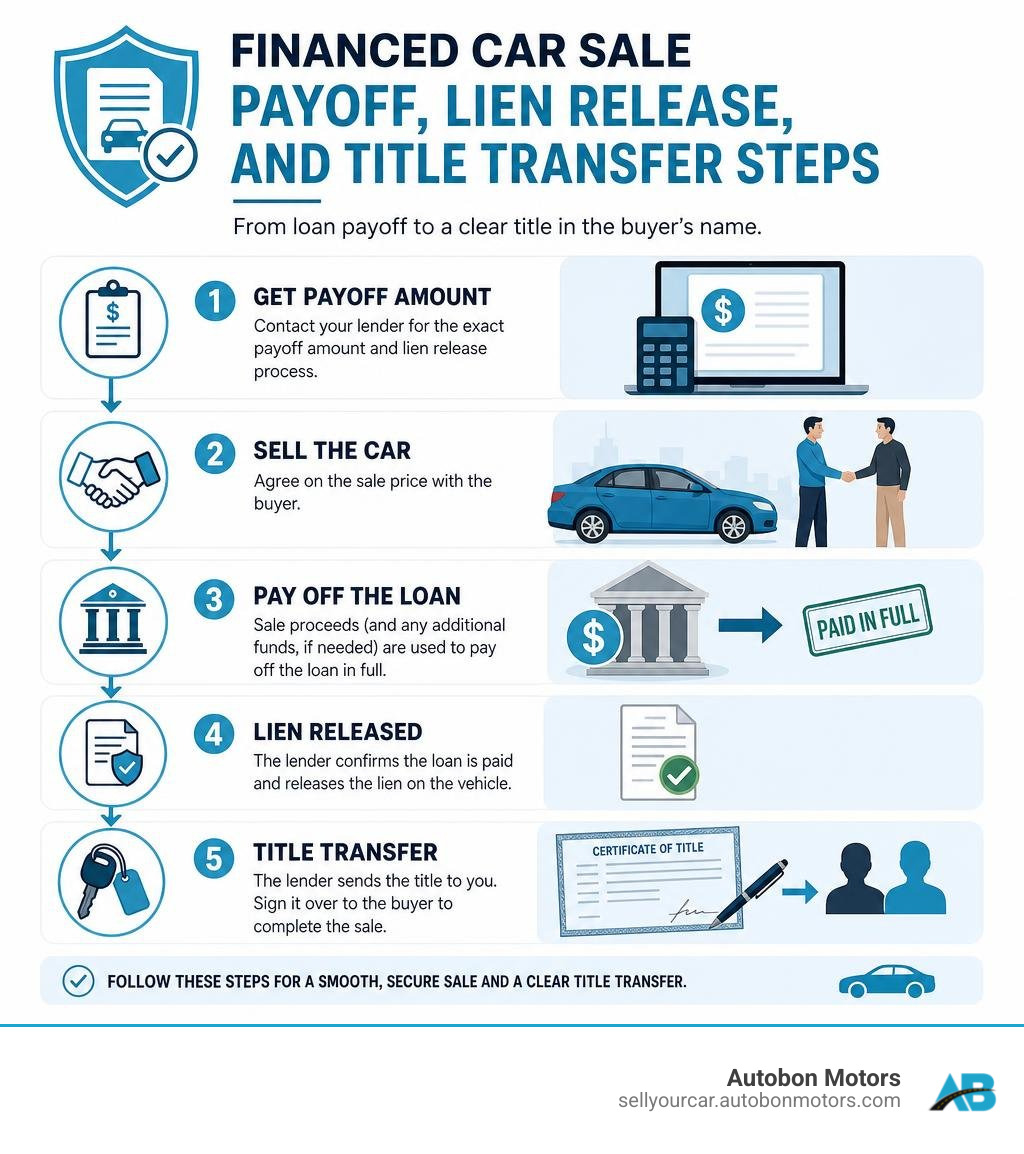
Yes, you can sell a car with a loan. Start by requesting your lender’s exact payoff amount and asking how it will release the title or lien. Then compare that payoff figure with your vehicle’s current value:
- If the car is worth more than the payoff, use the sale proceeds to clear the loan and keep the difference.
- If you owe more than the car is worth, you must cover the shortfall before the lender can release its lien.
- For a private sale, be open with serious buyers and consider completing payment at the lender’s office or through its approved process.
A financed vehicle has a lien attached to it, so the lender must be paid before clear ownership can move to the next owner. That extra step is common: Experian Automotive reports that more than 39% of vehicles on U.S. roads in 2026 still have an outstanding balance. And since cars can lose roughly 60% of their original value within five years, checking your equity before listing is essential.
If speed and less paperwork matter, Autobon Motors offers a more convenient, personalized local option: 01. Book your Appointment Online, 02. Bring your Car, 03. Get an instant Offer by one of our advisors, 04. Get Paid on the Spot. Our team can help South Florida sellers understand the payoff process without the usual runaround or haggling.
I am Marcos Bravo, a sales and marketing executive with more than 25 years of experience in South Florida’s luxury and exotic auto market. At Autobon Motors, I help local owners sell car with loan obligations while focusing on clear steps, fair value, and a smoother transaction.
Understanding Your Vehicle Equity Before You Sell
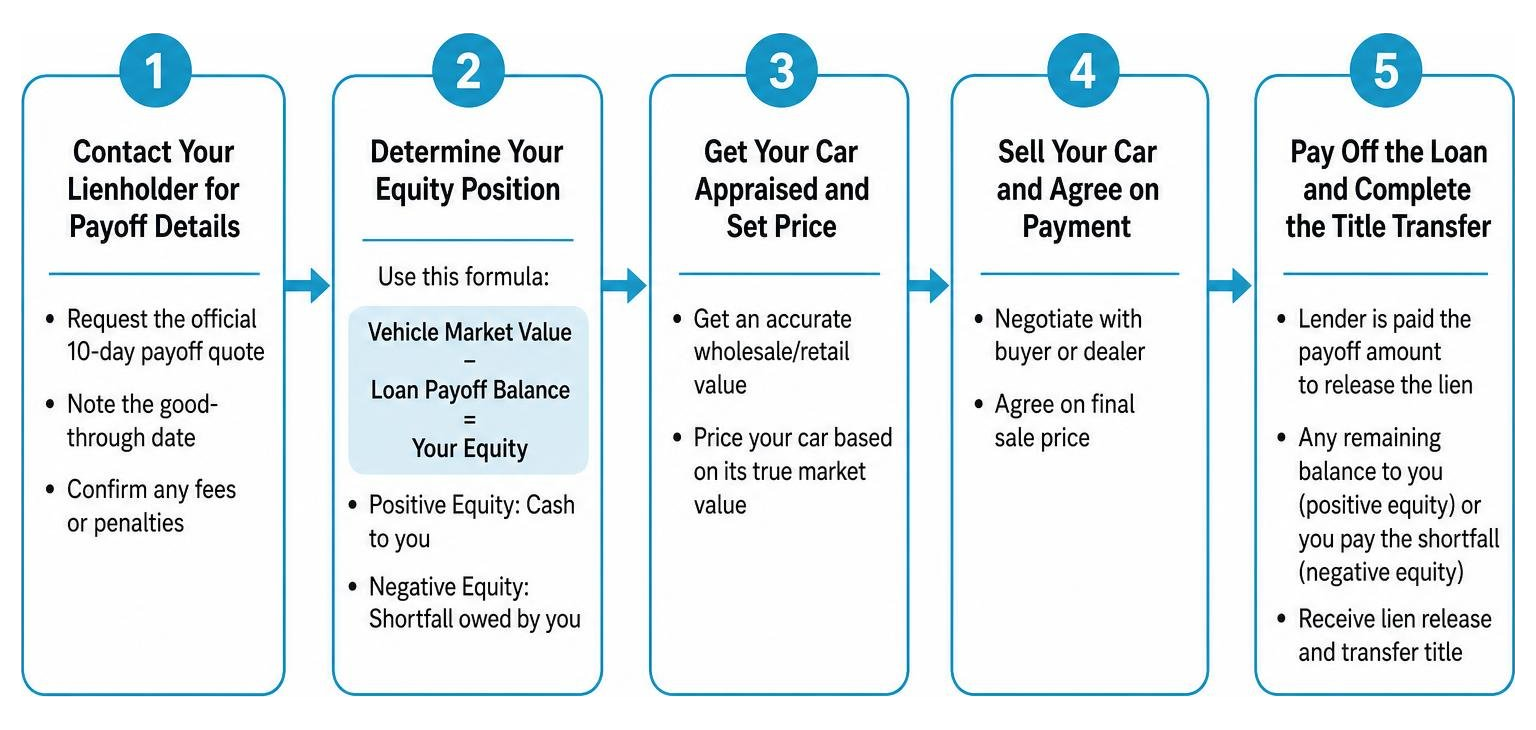
Before listing your vehicle or visiting a showroom in Fort Lauderdale or Miami, you must establish where you stand financially. Selling a financed vehicle is entirely manageable, but the mechanics depend on your equity position. Equity is simply the difference between what your vehicle is worth on the open market and the exact amount you still owe your lienholder.
To get an accurate picture, begin by checking our step-by-step guide to car appraisal and value estimation. Knowing your car’s true wholesale and retail value allows you to negotiate with confidence, whether you plan to execute a private sale or work directly with a licensed car buying service.
How to Determine Positive vs. Negative Equity
Calculating your equity comes down to simple math:
$$text{Vehicle Market Value} – text{Loan Payoff Balance} = text{Your Equity}$$
Depending on the result, you will find yourself in one of two situations:
- Positive Equity: The vehicle’s current market value exceeds your remaining loan balance. If your car is valued at $22,000 and your payoff amount is $16,000, you have $6,000 in positive equity. When the vehicle sells, the lender receives $16,000 to release the lien, and you pocket the remaining $6,000.
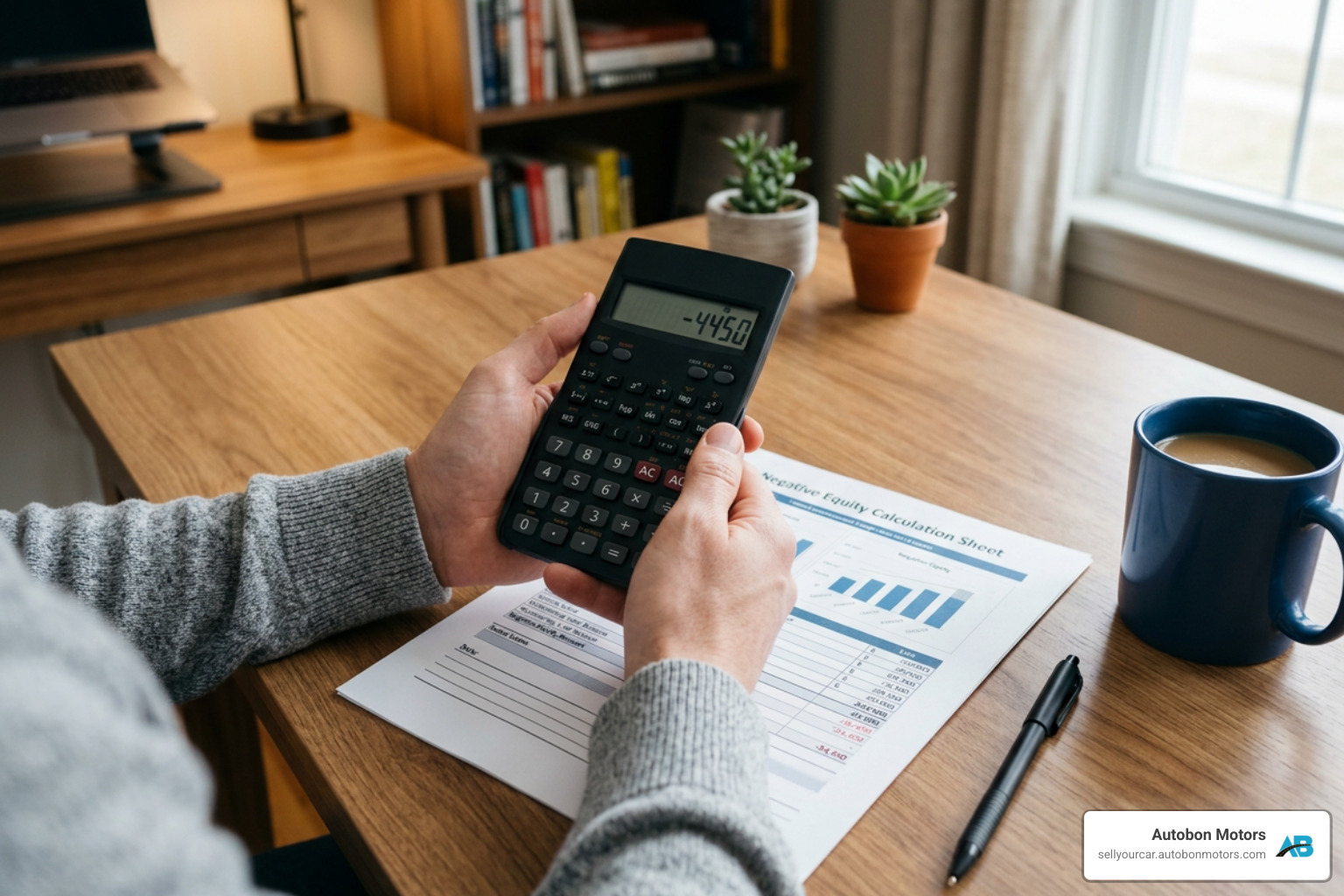
- Negative Equity (Underwater/Upside-Down): You owe more than the car’s current market value. If your payoff quote is $20,000 but the vehicle is worth $17,000, you have $3,000 in negative equity. To transfer clear ownership, you must provide that $3,000 shortfall to satisfy the lender.
| Metric | Positive Equity Scenario | Negative Equity Scenario |
|---|---|---|
| Market Value | $22,000 | $17,000 |
| Lender Payoff Balance | $16,000 | $20,000 |
| Net Financial Outcome | +$6,000 (Cash to Seller) | -$3,000 (Shortfall Owed by Seller) |
| Title Transfer Requirement | Buyer/Dealer pays lender; seller gets balance | Seller must pay difference to release lien |
Calculating Your 10-Day Loan Payoff Amount
Your monthly billing statement shows your principal balance, but that is not your official payoff amount. Auto loans accrue daily interest (per diem). When closing out a loan, you must request an official 10-day payoff statement from your lender.
According to Experian auto loan payoff guidance, a payoff quote includes the outstanding principal balance, accrued per diem interest up to the specified expiration date, and any administrative fees or prepayment penalties outlined in your contract. Always note the “good-through” date on this document to prevent delays when settling the balance.
5 Steps to Sell Car With Loan Successfully
Navigating a sale when a bank or credit union holds a lien does not have to be stressful. By following a structured approach, you can protect yourself legally and streamline the transaction. If you want to bypass weeks of messaging unvetted buyers, review our guide on how to sell a financed car and get paid fast.
Step 1: Contact Your Lienholder for Payoff Details
Your first call should always be to your lender’s customer service or financing department. Request the official payoff quote and ask the following questions:
- What is the exact 10-day payoff figure and good-through date?
- Does the state participate in the Electronic Lien and Title (ELT) program?
- If a private party or commercial buyer pays off the balance, how is the title released and to whom?
- Can the transaction be settled at a local bank branch?
Step 2: Prepare the Necessary Documents and Paperwork
Organizing your records beforehand makes the transaction transparent and reassuring for potential buyers. Gather the following items:
- Loan Account Information: Your account number, lender contact details, and the 10-day payoff letter.
- Current Vehicle Registration: Proof that the vehicle is actively registered in Florida.
- Maintenance Records: Invoices demonstrating consistent oil changes, scheduled maintenance, and repairs.
- Bill of Sale: A signed legal document containing the VIN, sale date, purchase price, and odometer reading.
- Valid Government ID: Driver’s license for all registered owners listed on the vehicle documentation.
Step 3: Set a Realistic Asking Price
Setting an appropriate asking price requires balancing local market conditions with your vehicle’s physical condition and mileage. Check our cash car offer survival guide to see how vehicle condition influences valuation.
While private sales may list slightly higher to account for negotiation, buyers in South Florida often expect a discount if they must navigate the added step of waiting for a lien release.
Step 4: Navigate the Title Transfer and Lien Release
In Florida, title and lien management are handled under strict regulatory oversight. Review the Florida Department of Highway Safety and Motor Vehicles guidelines to ensure compliance.

When selling privately, the safest place to finalize the transaction is at the lienholder’s local branch office. The buyer provides payment directly to the bank, the bank satisfies the loan, and the representative provides immediate lien satisfaction documentation. In Florida, once the lien is satisfied, the state’s Electronic Lien and Title system updates, allowing a paper title to be printed or reassigned to the new buyer.
Step 5: Settle the Balance and Finalize the Sale
Once payment is executed and the lender confirms the loan balance is zero:
- Sign the Bill of Sale: Both parties sign and retain copies detailing the final transaction amount and odometer reading.
- Remove Your License Plates: In Florida, never let a buyer drive away with your license plate. Remove the tag immediately and transfer it to another vehicle or surrender it to a local tax collector’s office.
- File a Notice of Sale: Submit Form HSMV 82050 (Notice of Sale) to the FLHSMV to legally release your liability for the vehicle moving forward.
Options When Your Vehicle Has Negative Equity
Owing more than your car is worth is common, particularly during the first few years of ownership due to early depreciation. If you find yourself upside-down on your auto loan, you have several paths forward.
How to Sell Car With Loan When You Owe More Than Market Value
If you decide to sell while underwater, you must make up the difference between the sale price and the loan balance:
- Pay Out-of-Pocket: The cleanest method is paying the deficit in cash directly to your lender at the time of sale. This immediately eliminates your debt and releases the title.
- Take an Unsecured Personal Loan: If cash is tight, some sellers utilize a personal loan to cover the shortfall. While personal loan interest rates can be higher, it allows you to get out from under insurance, registration, and ongoing depreciation costs of an unwanted vehicle.
- Wait and Pay Down Principal: If the vehicle is reliable, making extra principal payments over a few months can help you reach the break-even point before listing.
Should You Trade In or Sell Car With Loan Privately?
Deciding between a private sale and a direct dealership sale depends on whether you value maximum gross price or convenience and speed.
While a private buyer might offer a marginally higher price, private sales with negative equity require the buyer to trust that you will send your personal funds to the bank to clear the title. Many private buyers are hesitant to enter three-way transactions involving underwater loans.
If you want to understand your vehicle’s direct value without private sale hassles, explore our trade-in car price calculator to compare your options accurately.
Frequently Asked Questions About Selling Financed Cars
Does selling a financed car hurt your credit score?
Selling a financed car and paying off the loan does not directly damage your credit. You may see a temporary, minor dip of a few points because paying off an installment loan closes an active account, slightly reducing your credit mix and average account age. However, showing a closed auto loan paid in full as agreed is a strong positive indicator on your credit report over the long term.
What should I do if my lender holds the electronic title?
Florida is an Electronic Lien and Title (ELT) state. When you finance a car, the FLHSMV stores the title electronically with the lender listed as the primary lienholder.
Once the loan balance is satisfied, the lender transmits an electronic lien satisfaction to the state. After the electronic release clears (typically within 2 to 5 business days), you or the purchasing dealership can request a printed paper title from the local county tax collector office.
How do you handle skeptical private buyers when selling a car with a lien?
Transparency is essential. Inform the buyer early in negotiations that the vehicle carries an active lien. Offer to conduct the entire closing at your lender’s local branch. This gives the buyer peace of mind, as they can hand payment directly to the bank teller, watch the loan get marked paid in full, and receive a formal lien release receipt on the spot.
Conclusion
Selling a car with an outstanding loan is a standard, everyday automotive transaction. Whether you have substantial positive equity or need to clear a small negative equity balance, knowing your 10-day payoff figure and understanding Florida title transfer rules will keep your sale smooth and legally sound.
If you are located in South Florida and want to avoid the stress of meeting strangers, waiting on bank liens, or filling out endless state forms, Autobon Motors provides a streamlined, personalized alternative. Review our step-by-step guide to sell my car Fort Lauderdale cash to see how easy selling locally can be.
Our straightforward 4-step car selling process takes the friction out of selling a financed vehicle:
- 01. Book your Appointment Online
- 02. Bring your Car
- 03. Get an instant Offer by one of our advisors
- 04. Get Paid on the Spot
We handle all lender communications, payoff balances, and title paperwork directly—backed by our 15-minute appraisals, 3-day locked price guarantee, and top-dollar cash offers. Book your appointment today and let our local team handle the paperwork for you.