

How to Sell a Car Without Plates
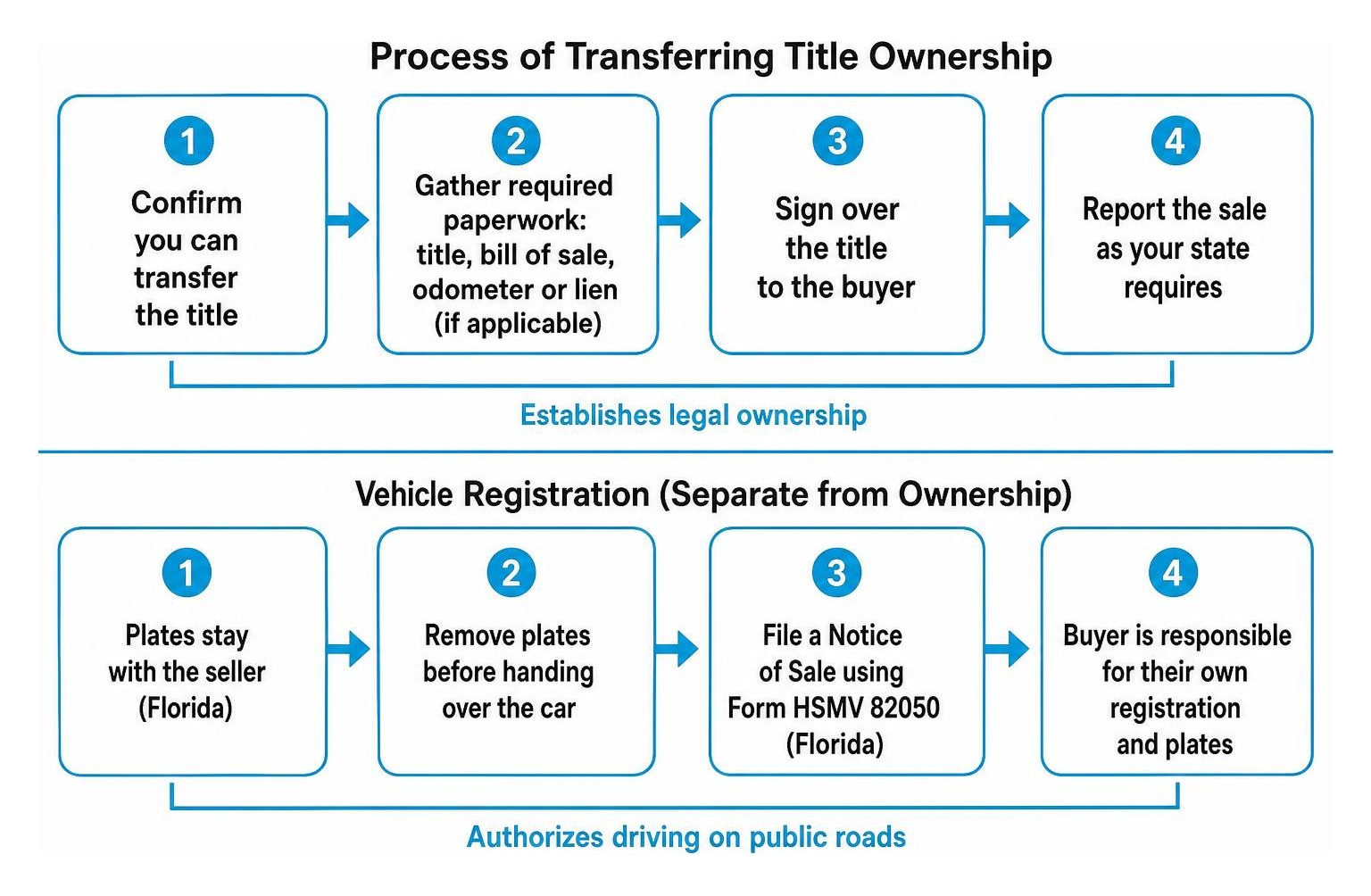
You can sell a car without plates. Start by confirming you can transfer the title. Gather a bill of sale and any required odometer or lien paperwork, then sign over the title and report the sale as your state requires. Do not allow a test drive or drive the car home on public roads without the required tag and insurance. If those are not in place, arrange a tow.
In Florida, plates stay with the seller. Remove them before handing over the car and file a Notice of Sale using Form HSMV 82050. The steps below explain how to handle the paperwork and plan a legal test drive or pickup.
I’m Marcos Bravo. After more than 25 years in South Florida’s automotive market, I help local owners understand how to sell a car without plates and avoid a stressful handoff.
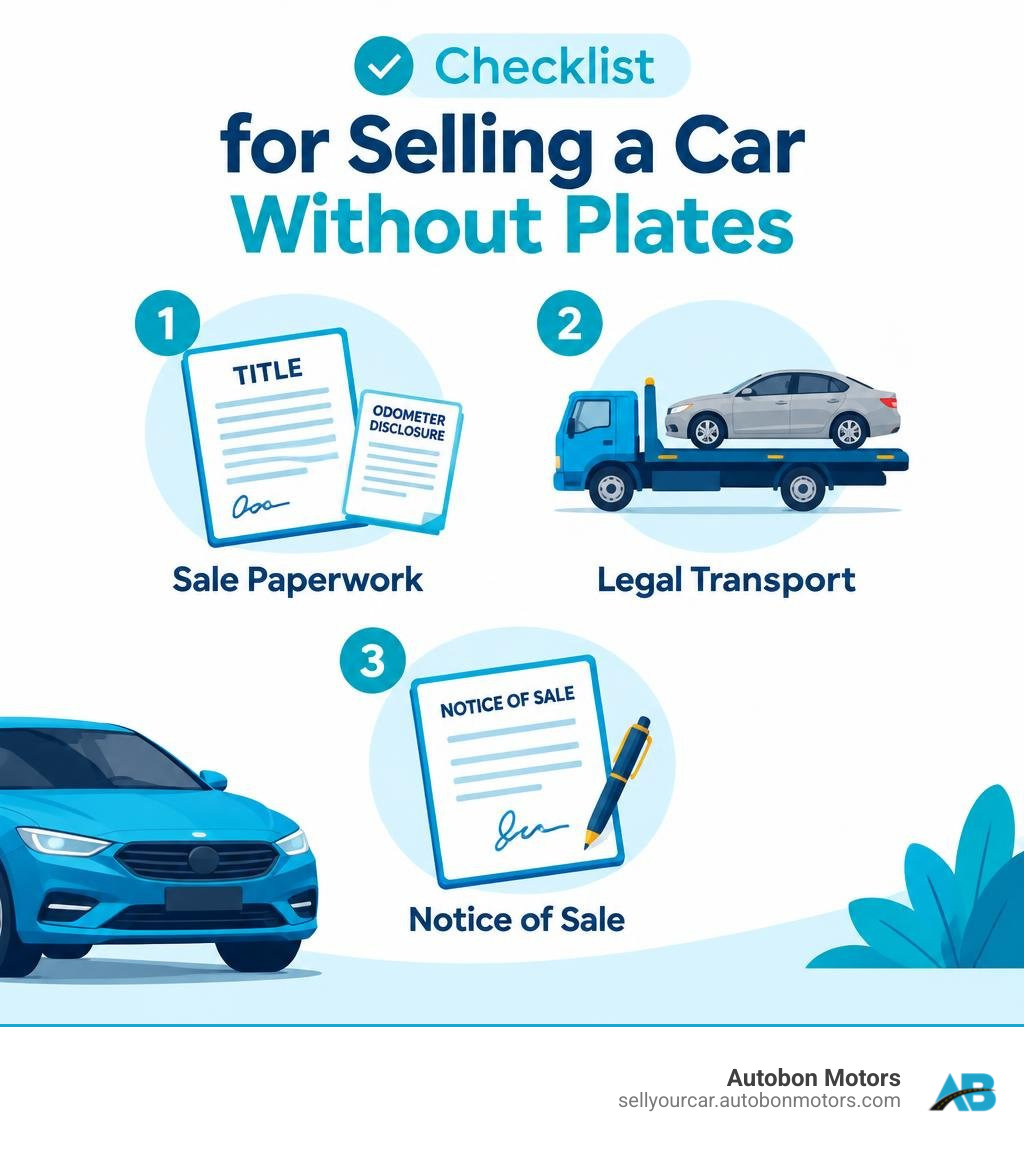
How to Sell a Car Without Plates: Legal Rules and Ownership Proof
Many vehicle owners believe that an active registration and a shiny metal tag bolted to the bumper are mandatory requirements to sell a vehicle. In reality, you can easily finalize a sale without them. When preparing your vehicle for transfer, mastering how to sell my car the right way comes down to understanding the distinct legal boundary between road registration and actual legal ownership.
Registration connects a car to the state highway system and authorizes it to drive on public asphalt. The Certificate of Title, on the other hand, establishes legal ownership. While driving a vehicle without valid registration will quickly earn you a citation from law enforcement, selling personal property that you legally own is entirely within your rights. Knowing state-by-state title regulations can help you navigate local administrative nuances.
Title vs. Registration: How to Sell a Car Without Plates Using Legal Ownership Proof
The single most important document in any automobile sale is the vehicle title. If your vehicle is currently unplated, stored in a garage, or designated under non-operational status, ownership transfer remains direct as long as your title is clean, legible, and unencumbered.
If you still owe money on the car, the existing lender holds an active lien, which prevents a clear title transfer until the balance is fully satisfied. Navigating a private sale with a financing balance requires extra coordination; reading a practical guide to selling a car with a loan will walk you through settling accounts directly with your lienholder to ensure clear release documentation.
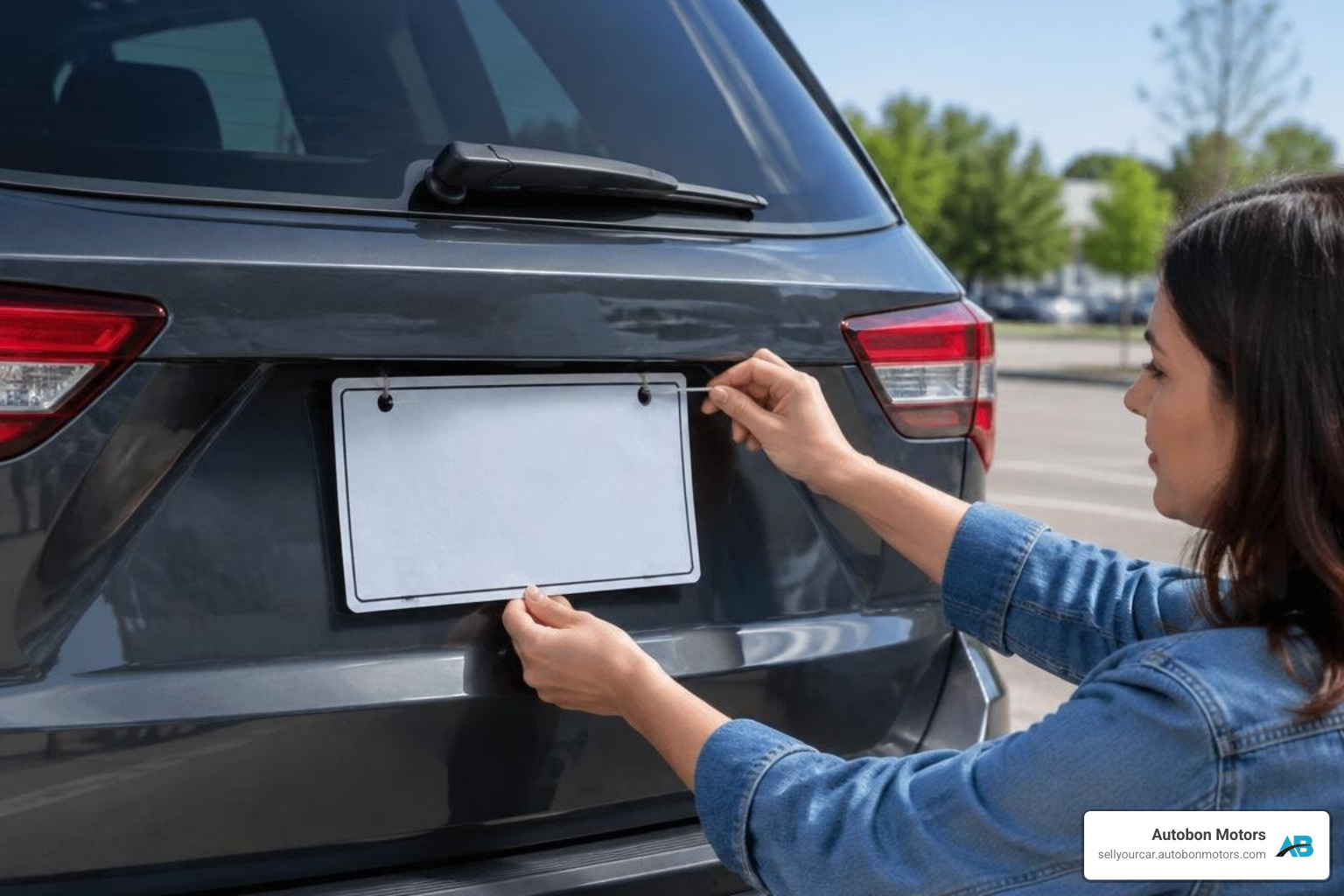
Why Sellers Must Remove License Plates Prior to Transfer
Leaving your personal license plate on a car you just sold is a significant financial and legal risk. In Florida, license plates belong to the individual owner, not the motor vehicle itself. If a buyer drives away with your physical plate attached, every red-light camera ticket, parking citation, toll infraction, or traffic violation incurred on their journey home links directly back to your personal driving record.
Removing your plate immediately at the point of exchange cuts off civil liability cleanly. The table below illustrates the standard plate handling procedures across various states:
| State | Plate Follows Seller or Vehicle? | Mandatory Notice of Sale Required? | Buyer Transit Grace Period |
|---|---|---|---|
| Florida | Stays with Seller | Yes (Form HSMV 82050) | None without temp permit |
| Texas | Stays with Seller | Recommended (VTR-346) | 5-day Transit Permit |
| Michigan | Stays with Seller | Yes | 3-day Direct Route Window |
| Indiana | Stays with Seller | No (Keep title copy/bill of sale) | Registration within 45 days |
| Missouri | Stays with Seller | Yes (Form 5049) | Temporary permit required |
Managing Test Drives, Insurance, and Temporary Demonstration Tags
Selling an unplated vehicle introduces an immediate practical hurdle: how do prospective private buyers test out the engine and transmission if the car cannot legally touch the pavement?
Managing Test Drives: How to Sell a Car Without Plates Safely
Public roads require valid registration, an active plate, and valid auto insurance. Never let a shopper take an unregistered vehicle onto public streets using a plate borrowed from another car—doing so is a traffic offense that can result in vehicle impoundment.
If you have already transferred your original metal tag to your new daily driver, Florida allows private sellers to apply for a specialized demonstration-only temporary tag through a county tax collector office. This temporary tag grants short-term road authorization strictly for test-driving purposes. If you prefer to avoid the DMV lines, you can arrange test drives on private property or quiet, private residential roads. Always inspect and take a photograph of the buyer’s active driver’s license before handing over the keys.
Insurance Requirements When Selling an Unregistered Vehicle
Never cancel your insurance policy until the title transfer is officially complete and the cash is in your hands. Even if a vehicle sits parked on your driveway awaiting a buyer, maintaining minimal liability and comprehensive coverage protects you if a prospective buyer damages the car during an inspection or if severe weather hits before the deal closes. Once the sale is finalized, you can contact your provider to cancel the policy or transfer coverage to another vehicle.
Step-by-Step Process to Complete the Private Vehicle Sale

If you are eager to streamline the process, exploring sell car fast 7 quick and easy ways can help you price, prep, and position your vehicle to move off your driveway quickly.
Essential Paperwork and Title Signing Procedures
To execute a private vehicle sale smoothly without plates, organize the following documentation in advance:
- Original Certificate of Title: Verify that your name is correctly printed on the front, without unreleased liens.
- Official Bill of Sale: Document the transaction date, agreed purchase price, exact VIN, make, model, and both parties’ legal names and signatures.
- Federal Odometer Disclosure: Accurate mileage reporting is legally required for all vehicles under 20 years old.
- Valid Government Identification: Keep a clear copy of the buyer’s photo ID for your post-sale records.
When filling out the title assignment, use blue or black ink and avoid making strike-throughs or using correction fluid, which can void the title document.
How Buyers Can Legally Transport an Unregistered Vehicle Home
Once the sale is signed, the buyer cannot legally drive home on public roads without their own temporary transit tag. In Florida, buyers have 30 calendar days to complete their title transfer and registration at a motor vehicle service center to avoid late penalty fees.
The buyer can obtain a temporary operating tag through the Florida Department of Highway Safety and Motor Vehicles upon showing proof of insurance and the newly signed title. Alternatively, the buyer can hire a licensed flatbed towing service to transport the vehicle home.
State-Specific Regulations and Post-Sale Plate Handling
In South Florida—spanning Fort Lauderdale, Miami, and the greater Broward County area—state laws require distinct post-sale administrative steps to ensure complete legal protection.
Florida Notice of Sale and Plate Surrender Guidelines
The most vital step for a Florida seller is filing Form HSMV 82050 (Notice of Sale). Submitting this form to your local motor vehicle service center updates state records to indicate that you have relinquished possession of the vehicle. This removes your civil liability if the buyer fails to register the car or incurs toll penalties.
Following a localized step by step guide to sell my car fort lauderdale cash ensures you complete all local municipal and state filings properly.
Disposing or Transferring Your Old License Plates
After you remove your plate from the vehicle, you have two primary options:
- Transfer the Tag: If you purchase a replacement vehicle, you can transfer your existing plate and registration for a nominal transfer fee, avoiding new initial registration charges.
- Surrender the Tag: If you do not plan to register another vehicle, return the plate in person or by certified mail to a Florida motor vehicle service center. Failing to surrender an active plate while canceling insurance can lead to a suspension of your driver’s license.
- Deactivate Toll Transponders: Remove the vehicle from your SunPass or E-PASS toll accounts immediately to avoid unexpected automated charges.
Frequently Asked Questions About Selling Cars Without Plates
Can a buyer legally drive a car home without license plates?
No, driving on public roadways without a valid license plate or an official temporary transit tag is illegal in Florida. Buyers must either obtain a temporary tag from the county tax collector by presenting the signed title and insurance, or transport the vehicle using a tow truck.
Should I renew my vehicle registration before selling?
If you plan to sell the car quickly, renewing an expired registration is usually unnecessary and adds out-of-pocket expense. However, an unplated car does prevent on-road test drives. If your title is missing entirely, following how to sell a car without title in 5 easy steps will help you secure the proper replacement paperwork before listing your vehicle.
What happens if I forget to remove my plates when selling?
If you leave your license plates on the sold car, you remain the registered owner in the state database. You could receive traffic camera fines, toll bills, and parking tickets, and you could face potential civil liability if the vehicle is involved in an accident. Always remove your plates and submit Florida Form HSMV 82050 immediately.
Conclusion
Selling a vehicle privately without plates is entirely doable, but coordinating temporary demonstration permits, handling test drives safely, taking off tags, and filing liability releases at the county office can quickly turn into a time-consuming administrative headache.
If you are looking for a convenient, personalized, and far less bureaucratic way to sell your car in South Florida, Autobon Motors provides a streamlined alternative tailored to local sellers. Located right here in Fort Lauderdale, we eliminate the paperwork hassles, tag transfer confusion, and DMV lines.
Our transparent selling process is simple:
- Book your Appointment Online
- Bring your Car to our Fort Lauderdale location
- Get an instant Offer by one of our advisors within a 15-minute appraisal (locked for 3 days with our higher offer guarantee)
- Get Paid on the Spot
Whether your vehicle has an expired tag, no plates at all, or a missing title, we handle the paperwork for you. Visit our team in Fort Lauderdale today and turn your car into guaranteed cash without the stress!