

How to Sell a Car Without a Title Legally
Here’s how to sell a car without title paperwork: confirm that the vehicle is yours, check your state’s transfer rules, and request a replacement title if one is required. If a lender has a lien, arrange the payoff and title release before the sale. Use a bill of sale and other ownership records to support the transfer, but don’t assume they replace a title. After the sale, file any required notice and handle the license plates under your state’s rules.
In Fort Lauderdale, Autobon Motors keeps the selling process personal and simple: book an appointment online, bring your car, get an instant offer from an advisor, and get paid on the spot once the paperwork is in order.
I’m Marcos Bravo, and I’ve spent more than 25 years helping South Florida drivers navigate vehicle sales. That experience shapes this guide to how to sell a car without title paperwork while protecting both you and the buyer.
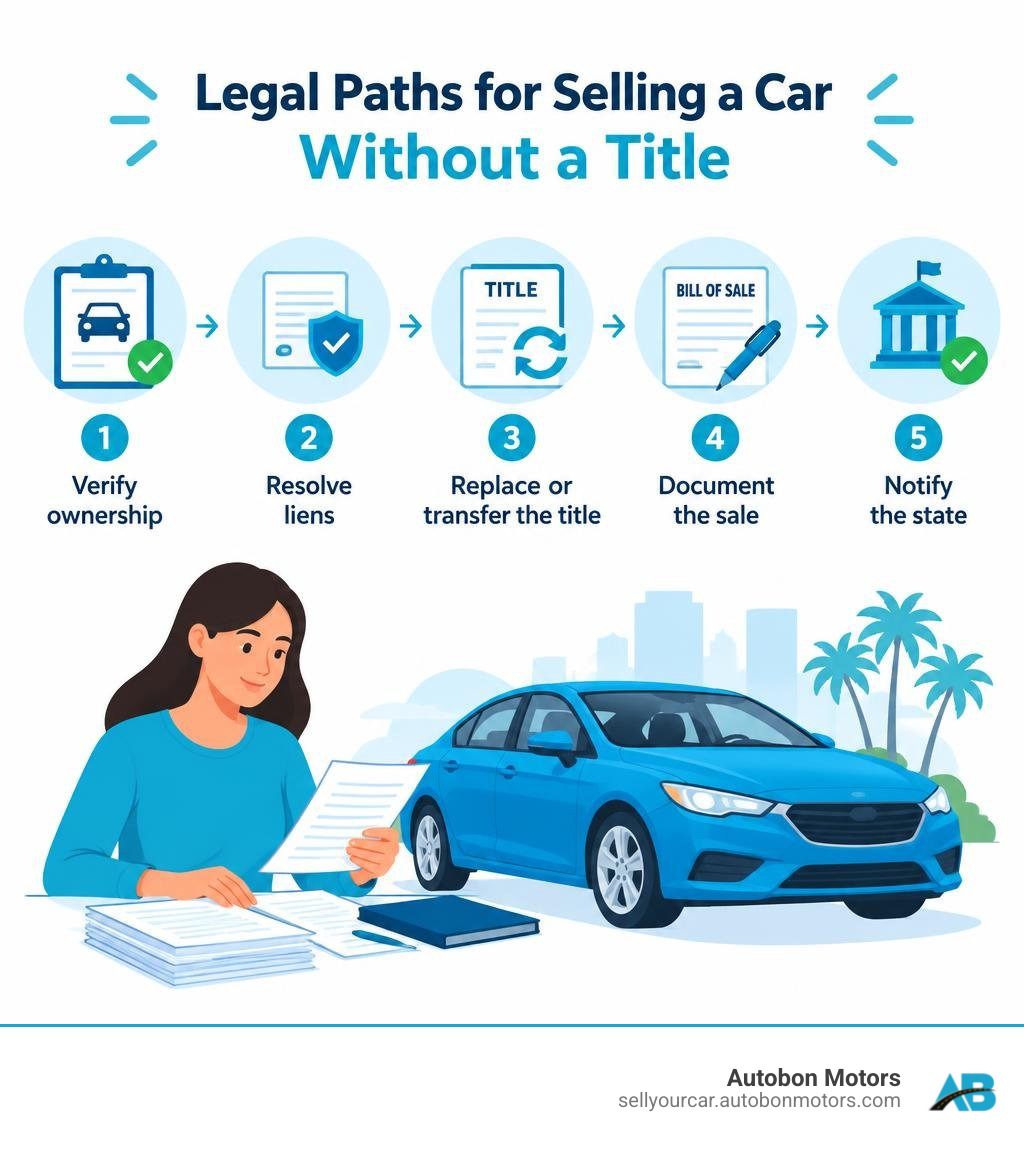
Legal Proof of Ownership: Documents to Use When You Have No Title
A vehicle title certificate serves as the primary legal document proving ownership across the United States. When that physical document goes missing, is damaged, or was never issued in your name, selling the vehicle requires establishing a clear, uninterrupted chain of ownership. In South Florida and across Broward County, local motor vehicle agencies require verifiable documentation before any ownership rights can be transferred to a new party.
If you find yourself without the physical certificate, several secondary documents can help substantiate your ownership claim:
- Current or Expired Vehicle Registration: Shows that the vehicle is registered in your name with the state licensing agency.
- Official Bill of Sale: Proves when, where, and from whom you originally acquired the vehicle.
- Manufacturer’s Certificate of Origin (MCO): Used primarily for vehicles that have never been previously titled.
- Active Insurance Policy Records: Demonstrates continuous financial responsibility and legal possession over time.
- Lien Payoff Verification Letter: Confirms that any previously recorded financial obligations have been fully satisfied.
Understanding the legal framework behind how to sell my car the right way ensures you do not inadvertently commit a misdemeanor or leave yourself open to legal disputes. For vehicle owners in Florida, reviewing the official Florida HSMV guidance on selling a vehicle provides clear regulatory benchmarks on transferring ownership without unnecessary legal exposure.
| Ownership Solution | Typical Timeframe | Primary Requirement | Best Use Case |
|---|---|---|---|
| Duplicate / Replacement Title | Same day to 30 days | Valid photo ID & VIN verification | Standard lost, stolen, or damaged titles |
| Bonded Title (Surety Bond) | 2 to 6 weeks | Surety bond policy & vehicle inspection | Defective chain of ownership or missing historical records |
| Registration-Only Transfer | Immediate | Active registration & Bill of Sale | State-exempt vintage or classic vehicles |
| Electronic Title Transfer | Instantaneous | State motor vehicle database record | Digital titles held with paid liens or active DMV e-records |
Writing an Enforceable Bill of Sale
A comprehensive bill of sale is essential in every vehicle transaction, particularly when physical title paperwork is missing. While a bill of sale alone does not transfer legal title in most jurisdictions, it establishes a legally binding contract detailing the transfer of interest, purchase price, and vehicle condition.
To ensure your document withstands scrutiny by tax collectors and licensing authorities, it must contain:
- Complete Vehicle Identification Number (VIN): All 17 digits verified directly against the dashboard and door jamb plates.
- Detailed Vehicle Specifications: Year, make, model, body style, and current color.
- Accurate Odometer Disclosure: Exact mileage reading at the moment of sale, certified in compliance with federal truth-in-mileage laws.
- Financial Terms: Total agreed purchase price and method of payment.
- Full Legal Names and Signatures: Physical addresses, phone numbers, and signatures of both seller and buyer.
- Notary Public Attestation: Formal notarization adds legal weight, proving the identity of all signing parties.
Obtaining a Replacement Title vs. a Bonded Title
When a title is lost, applying for a duplicate or replacement certificate is the standard procedure. If the vehicle is currently registered in your name in the state’s database, the motor vehicle department can issue a duplicate title upon submission of an application and payment of administrative fees.
However, if you purchased a car without receiving a title and the previous owner cannot be reached, a bonded title may be necessary. A bonded title requires purchasing a surety bond from a licensed insurance company. The bond protects previous owners and future buyers against financial loss if an undisclosed ownership dispute or lien arises. Many states establish clear vehicle valuation thresholds—often requiring a surety bond equal to one-and-a-half to two times the fair market value of the vehicle if its value exceeds statutory minimums.
Step-by-Step: How to Sell a Car Without a Title Legally
Selling a vehicle without the title in hand requires methodical execution to prevent bureaucratic delays or civil liability after the transaction.
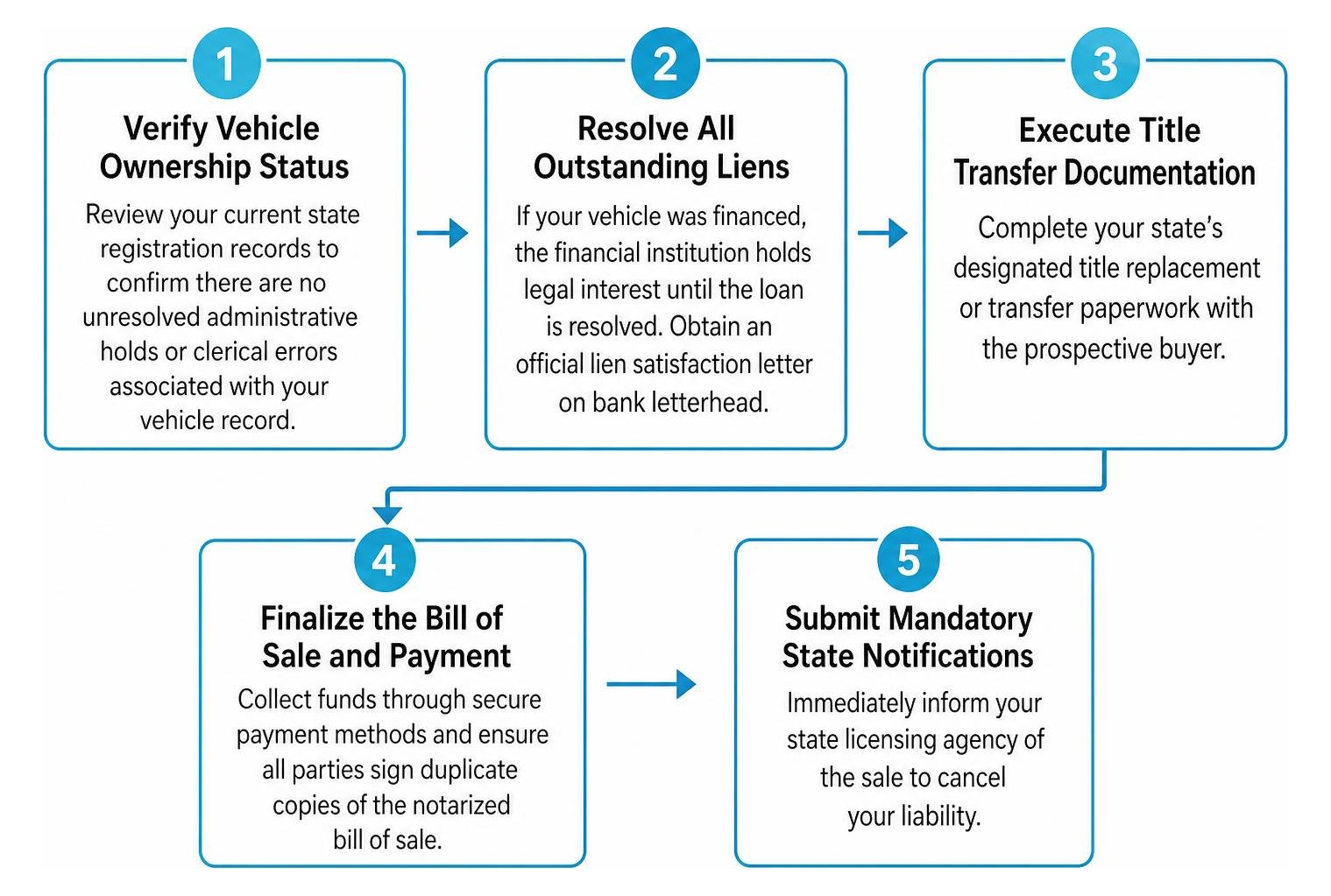
- Verify Vehicle Ownership Status: Review your current state registration records to confirm there are no unresolved administrative holds or clerical errors associated with your vehicle record.
- Resolve All Outstanding Liens: If your vehicle was financed, the financial institution holds legal interest until the loan is resolved. Review our practical guide to selling a car with a loan to coordinate direct payoffs and obtain an official lien satisfaction letter on bank letterhead.
- Execute Title Transfer Documentation: Complete your state’s designated title replacement or transfer paperwork with the prospective buyer.
- Finalize the Bill of Sale and Payment: Collect funds through secure payment methods and ensure all parties sign duplicate copies of the notarized bill of sale.
- Submit Mandatory State Notifications: Immediately inform your state licensing agency of the sale to cancel your liability.
When working with buyers or navigating state requirements, you can also reference official state procedures, such as selling a vehicle without a title in Connecticut, to understand how different jurisdictions handle these transactions.
State-Specific Regulations: How to Sell a Car Without Title Across Key States
State motor vehicle laws vary significantly regarding documentation requirements, title exemptions, and seller notifications.
- California: The California DMV allows sellers to bypass a separate title replacement procedure using Form REG 227 (Application for Duplicate or Paperless Title). This form combines the duplicate title application and the transfer of ownership into a single step, provided smog certification is current within 90 days.
- Connecticut: Connecticut operates under a 20-year exemption rule, meaning motor vehicles over 20 model years old do not require a title certificate for ownership transfer. Sellers use the Supplemental Assignment of Ownership (Form Q1) alongside the vehicle registration.
- Georgia: Vehicles manufactured prior to model year 1986 are exempt from title requirements in Georgia. For these classic models, transfer of ownership requires a standard bill of sale and a law-enforcement physical inspection certificate.
- Utah: If traditional evidence of ownership is missing, sellers follow the Utah Division of Motor Vehicles Insufficient Evidence of Ownership procedure. If the vehicle value exceeds $3,000, the state requires an approved surety bond before a new title can be issued. Reference the Utah DMV transfer without title process for state-mandated inspection checklists.
- Washington: Sellers who have lost their title must file an Affidavit of Loss/Release of Interest. Furthermore, Washington state requires sellers to file an official Report of Sale within 5 business days of the transaction.
Protecting Yourself Post-Sale: Notice of Transfer and Plate Removal
Failing to properly notify the state after handing over your vehicle is a common pitfall in private-party transactions. Until the state updates its registry, the recorded owner remains legally responsible for unpaid toll charges, municipal parking infractions, and civil liabilities stemming from traffic collisions.
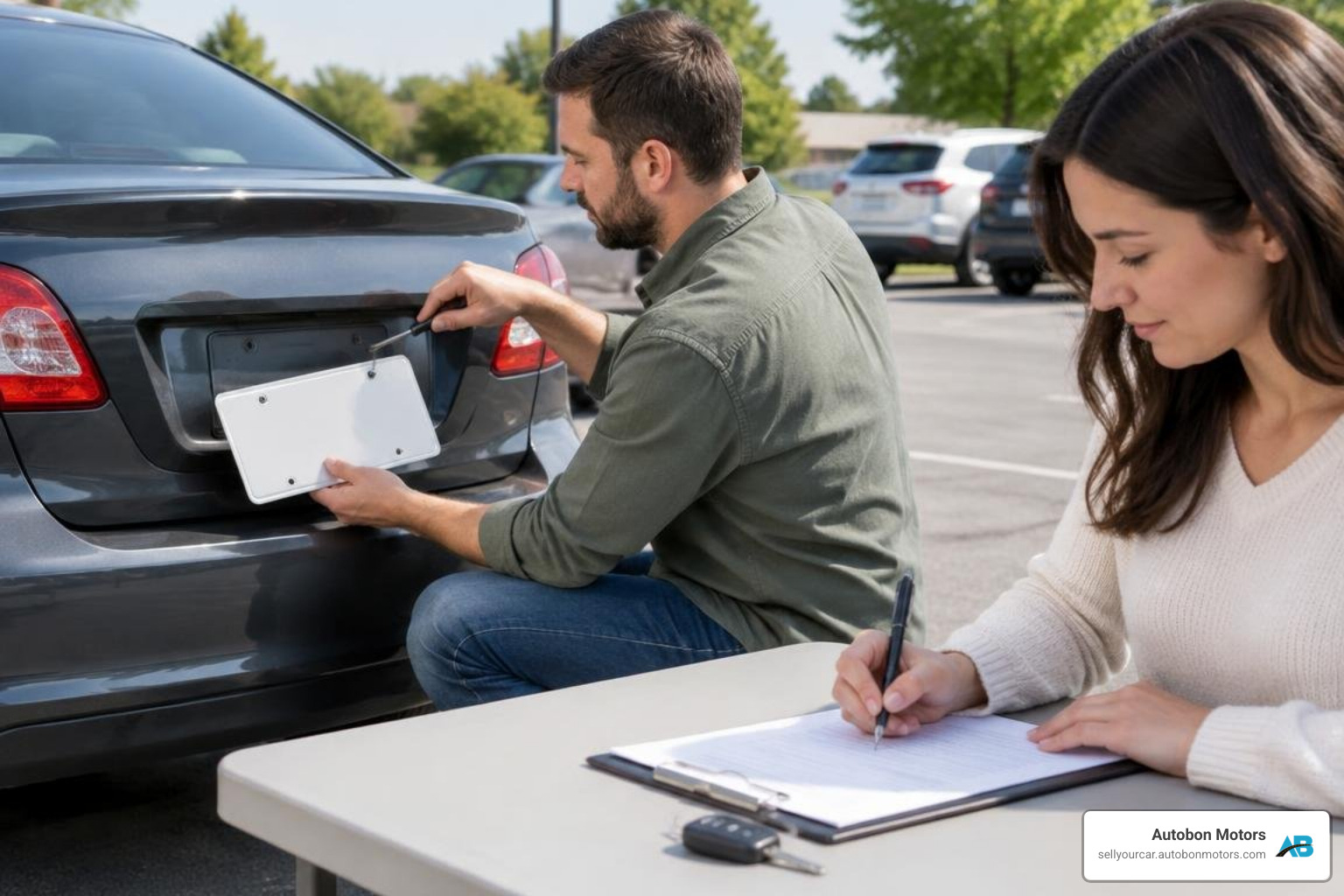
Always take these two protective steps immediately upon completing the sale:
- Remove Your License Plates: Never permit the buyer to drive away with your registered license plates. In Florida and across most states, license plates remain the property of the registered owner and must either be transferred to another vehicle or surrendered to the tag agency. If the buyer is driving the car, guide them on handling unregistered vehicles without plates using a temporary transit tag issued by the DMV.
- File a Notice of Transfer / Release of Liability: Submit an official Notice of Sale (such as Florida Form HSMV 82050 or California Form REG 138) within the state-mandated window—often within 5 to 10 days. This formal filing severs your legal ties to the vehicle.
Special Vehicle Scenarios: Old Cars, Liens, and Scrap
Not every vehicle sale involves a standard late-model car with a simple lost title. Specific vehicle conditions introduce unique procedural rules.
How to Sell a Car Without a Title When It Is Junk, Salvaged, or Vintage
Older vehicles, total-loss salvage units, and non-running scrap cars often lack continuous title documentation. When disposing of a damaged or inoperable vehicle, specific exceptions apply:
- Scrap and Salvage Yards: Licensed automotive dismantlers can frequently purchase inoperable vehicles using a Statement of Facts or a Derelict Vehicle Certificate alongside photo identification. Valuation for scrap vehicles is determined primarily by curb weight and current market prices for scrap steel and precious metals.
- Value Optimization: Even for salvage-grade vehicles, obtaining a duplicate title first can substantially increase your cash payout by eliminating administrative costs for the buyer.
- Vintage Vehicles: Many states allow older vehicles (such as models 20 to 25 years old or older) to transfer ownership via continuous registration history, manufacturer certificates, and notarized bills of sale without issuing a modern paper title.
If you are looking to liquidate an older or non-operational vehicle quickly, our complete guide to selling your car for cash today outlines how to maximize returns while avoiding private-buyer negotiation headaches.
Buyer Risks and Protections in Titleless Transactions
Private buyers are often cautious when considering a vehicle without a physical title certificate. Understanding these valid buyer concerns helps you prepare the necessary disclosures:
- Undisclosed Financial Liens: A vehicle cannot be legally registered if a lender holds an unsatisfied security interest. Buyers risk having the vehicle repossessed if a prior owner defaulted on a loan.
- Stolen Property Concerns: Purchasing a car without a title exposes buyers to the risk of acquiring a stolen vehicle, leading to confiscation by law enforcement without financial restitution.
- Registration Ineligibility: Without clear ownership documentation, the DMV may reject registration applications, leaving the buyer with an unusable vehicle.
To build buyer confidence, provide a certified national vehicle history report, arrange a public meeting at a local licensing office, or complete a professional third-party VIN verification inspection.
Frequently Asked Questions about Selling a Car Without a Title
Is it legal to sell a car without a title in my state?
Yes, provided you follow the specific legal mechanisms established by your state motor vehicle department. It is illegal in all jurisdictions to sell a vehicle you do not legally own or to misrepresent ownership. However, if you are the verified legal owner on record, you can sell the vehicle by obtaining a replacement title, utilizing combined transfer forms (where recognized), or taking advantage of statutory age exemptions for vintage models.
How long does it take and how much does it cost to get a duplicate title?
Processing times and fees depend on your state and whether expedited services are available:
- Standard Processing: Regular mail-in applications typically take between 2 to 6 weeks.
- Expedited / Fast-Title Services: Many local tax collector offices and state DMV branches offer same-day or print-on-demand replacement titles for an additional administrative fee.
- Costs: State application fees generally range from nominal processing charges to moderate administrative fees, depending on your jurisdiction’s fee schedule.
What should I do if the missing title has an active lien?
When an outstanding loan balance remains, your financial institution holds the physical or electronic title. To complete a sale:
- Contact the lender to obtain an official 10-day payoff balance statement.
- Review established methods to sell a financed car and get paid fast to coordinate payment directly with the lienholder.
- Once paid, the lender will electronically release the lien in the state database or issue a formal lien satisfaction letter on corporate letterhead, enabling the issuance of a clean title.
Conclusion
Navigating the paperwork to sell a vehicle without a physical title can be daunting. Between state DMV forms, lien releases, notary requirements, and liability filings, private sales often turn into time-consuming administrative burdens. Understanding quick and easy ways to sell your car allows you to bypass the traditional hassles of the private market.
At Autobon Motors, we provide a personalized, transparent, and hassle-free alternative tailored specifically to South Florida sellers in Fort Lauderdale, Miami, and across Broward County. Instead of spending weeks untangling state bureaucracy or dealing with skeptical private buyers, our local team handles the title verification, lien payoffs, and transfer paperwork on your behalf.
Our streamlined selling process requires just four simple steps:
- Book your Appointment Online: Choose a time that fits your schedule using our online booking platform.
- Bring your Car: Visit our Fort Lauderdale dealership for a rapid vehicle evaluation.
- Get an instant Offer by one of our advisors: Receive a transparent, top-dollar appraisal backed by our 3-day price guarantee.
- Get Paid on the Spot: Complete the paperwork effortlessly and leave with immediate payment in hand.
Whether your title is misplaced, digital, or tied to an existing loan, our dedicated team is here to help. Review our practical guide on how to sell a car without title in 5 easy steps, or schedule your appointment with Autobon Motors today to experience a fast, customer-first vehicle sale.