
Why a Car Appraisal Can Make or Break Your Next Sale
Getting a car appraisal is the single most important step before selling, trading in, or insuring your vehicle. It tells you what your car is actually worth — not what you hope it’s worth.
Quick answer: What is a car appraisal?
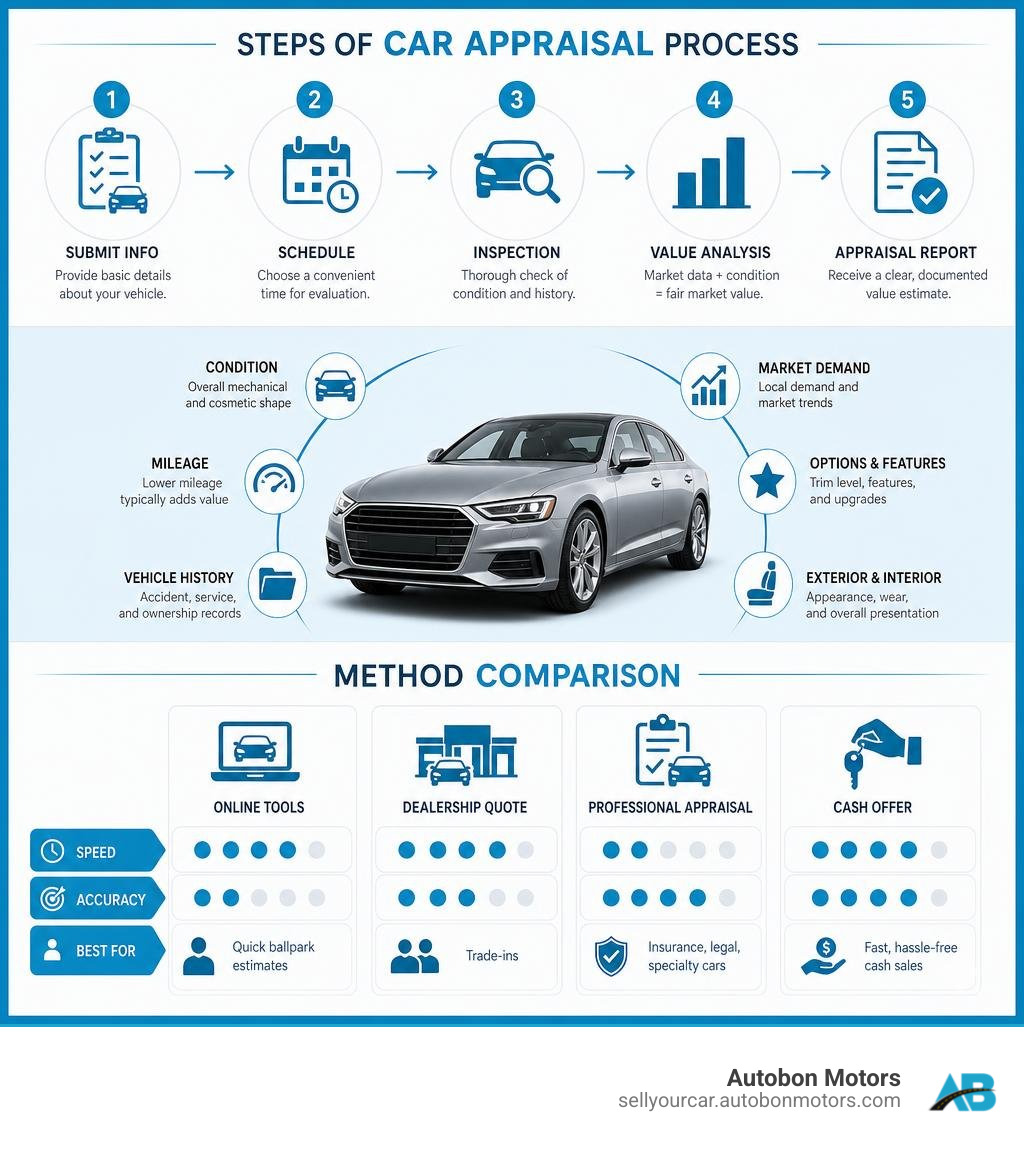
A car appraisal is a documented estimate of your vehicle’s fair market value. Here’s how the main options compare at a glance:
| Method | Speed | Accuracy | Best For |
|---|---|---|---|
| Online tools (KBB, Edmunds) | Instant | ±10–20% | Quick ballpark estimates |
| Dealership quote | Same day | Varies | Trade-ins |
| Professional independent appraisal | 1–2 days | ±5% or better | Insurance, legal, specialty cars |
| At-home or in-person cash offer | Same day | High | Fast, hassle-free cash sales |
Most South Florida car owners start with an online tool like Kelley Blue Book — which has tracked vehicle values since 1926 and updates pricing weekly across 100+ regions. But online estimates can miss key details that only a physical inspection catches: accident history, mechanical condition, regional demand, and title brands.
That gap between what an algorithm says and what a buyer will actually pay? That’s where a proper appraisal makes all the difference.
I’m Marcos Bravo, a luxury and exotic automotive sales expert with over 25 years of experience in South Florida’s high-end car market, and I’ve seen how an accurate car appraisal protects sellers from leaving thousands of dollars on the table. In this guide, I’ll walk you through everything you need to know — from how appraisals work to how to get the best possible value for your vehicle.
What is a Car Appraisal and How Does It Work?
To truly understand your vehicle’s worth, we must first separate automated internet guesses from formal, boots-on-the-ground valuations. A car appraisal is a comprehensive evaluation conducted by a qualified professional to establish the fair market value of a vehicle. While an online calculator uses broad algorithms to spit out a generic range, a professional appraisal inspects the physical reality of your specific car under local market conditions.
Online valuation tools, such as the widely recognized Kelley Blue Book, have been serving the automotive industry for over 90 years. These platforms analyze massive amounts of historical market data, wholesale auction results, and retail transaction histories to establish baseline figures. Similarly, NADA (which represents more than 16,000 new-car dealers across the United States) and Consumer Reports (utilizing Black Book data updated weekly since 1955) provide highly trusted industry benchmarks.
However, these tools are only as accurate as the data typed into them. If a user incorrectly estimates their car’s condition as “excellent” when it is actually “fair,” the online valuation will be off by thousands of dollars.
This is where modern technology is stepping in to bridge the gap. Artificial intelligence (AI) is transforming how we calculate car values. For example, Spyne’s AI-powered car valuation tool has delivered over 400,000 instant car valuations, saving users more than 3 million hours by streamlining the pricing process. By analyzing live marketplace listings, real-time demand trends, and regional sales data, AI tools have helped users report four times more deals closed due to highly accurate, data-backed pricing.
In addition to AI, advanced systems now cross-reference the National Motor Vehicle Title Information System (NMVTIS) database to instantly flag title issues. Some cutting-edge platforms are even exploring blockchain technology to create tamper-proof ledgers of odometer readings, service records, and title transfers, virtually eliminating mileage fraud.
Yet, even with these technological leaps, a computer cannot smell a leaky sunroof, hear a ticking lifter, or feel a subtle transmission slip during a test drive. If you want to know what your car is worth today in Fort Lauderdale, Miami, or anywhere in Broward County, you can Get an Instant Car Valuation through our streamlined tools, but a physical inspection remains the gold standard.
Online Valuation Tools vs. Professional Appraisals
| Feature | Online Valuation Tools | Professional In-Person Appraisals |
|---|---|---|
| Data Source | Historic transaction databases & algorithms | Live physical inspection + local comps |
| Accuracy | General ballpark (±10% to 20% variance) | Highly precise (±5% or better) |
| Time Investment | 2 to 5 minutes | 15 to 45 minutes |
| Considers Local Nuances? | Broad regional adjustments only | Accounts for specific South Florida dealer demand |
| Legal/Insurance Validity | No (informal estimate only) | Yes (USPAP-compliant for claims/estates) |
Key Factors That Influence Your Vehicle’s Appraised Value
When an appraiser looks at your vehicle, they aren’t just checking if the engine turns on and the paint shines. They are analyzing a complex web of factors that dictate how easily the car can be resold in South Florida’s unique market.

1. Mileage and Usage
The Federal Highway Administration reports that U.S. drivers put an average of 13,476 miles on their cars each year. If your vehicle’s odometer shows significantly more than this annual average, expect its appraised value to drop. High mileage suggests accelerated wear and tear on critical mechanical components like the engine, transmission, and suspension.
2. Vehicle Condition (Exterior, Interior, and Mechanical)
We live in South Florida, where the intense tropical sun, salty coastal air, and sudden afternoon downpours take a heavy toll on vehicles. An appraiser will carefully examine:
- Exterior: Faded clear coats, rust spots from coastal salt air, parking lot door dings, and mismatched paint from previous body repairs.
- Interior: Sun-cracked leather dashboards, torn upholstery, and lingering odors (such as smoke or mold from humid weather).
- Mechanical: Fluid leaks, worn brake rotors, suspension noises, and the health of the air conditioning system—which is an absolute dealbreaker in Miami and Fort Lauderdale!
3. Title History and Brand Records
A clean title is gold. If your vehicle has a branded title—such as salvage, rebuilt, or flood—its appraised value will suffer dramatically. Every state is federally mandated to report title brands to the NMVTIS database to prevent fraud.
To put this in perspective, vehicle history is so critical that global studies show how common hidden damage is; for instance, in some European import markets like the Netherlands, up to 25% of imported used cars had reported damage. If your car has been in a documented accident, even if perfectly repaired, it suffers from “inherent diminished value” simply because buyers prefer cars with clean histories. If you’ve recently been in an accident and want to understand how this history impacts your bottom line, learn How to Calculate Diminished Value Loss.
4. Market Trends and Regional Demand
Automotive fashion is real. Currently, compact crossover SUVs and fuel-efficient hybrids are in high demand, while large sedans have cooled off. Furthermore, regional geography heavily influences demand. In South Florida, convertibles and luxury sports cars experience a 5% to 10% value bump during the gorgeous spring and summer months, whereas all-wheel-drive snow-ready SUVs do not command the same premium here as they do in the Northeast. Appraisers routinely adjust their final valuations by up to 3% to account for these hyper-local supply and demand variations.
The Step-by-Step Car Appraisal Process
If you have never had a professional car appraisal before, the process might seem shrouded in mystery. In reality, a certified appraisal follows a highly structured, objective methodology. Professional independent appraisals often adhere to the Uniform Standards of Professional Appraisal Practice (USPAP). These standards require appraisers to maintain strict ethical guidelines, perform unbiased market research, and retain their complete valuation workfiles for a minimum of five years.
For a standard vehicle transaction, the appraisal process moves through these core phases:
- Information Gathering: The appraiser records the vehicle identification number (VIN), license plate, exact mileage, and factory options.
- Physical Inspection: A meticulous hands-on walk-around of the vehicle’s exterior, interior, and engine bay.
- Road Test: Driving the vehicle to evaluate steering alignment, braking performance, engine responsiveness, and transmission shifts.
- Database & History Analysis: Running reports via NMVTIS or CARFAX to verify ownership history, title brands, and past accidents.
- Market Comparison (Comps): Comparing your vehicle against three or more identical models recently sold in the local South Florida market, adjusting for differences in mileage and condition.
- Valuation Report: Delivering a comprehensive, legally binding document detailing the vehicle’s exact worth.
If you are looking for a fast, hassle-free way to get your vehicle appraised without the typical dealership runaround, you can secure a guaranteed valuation through our Professional Car Appraisals portal.
Preparing Your Vehicle for a Car Appraisal
Maximizing your car’s value doesn’t require spending thousands of dollars, but it does require some basic preparation. Think of it as staging a house before an open house.
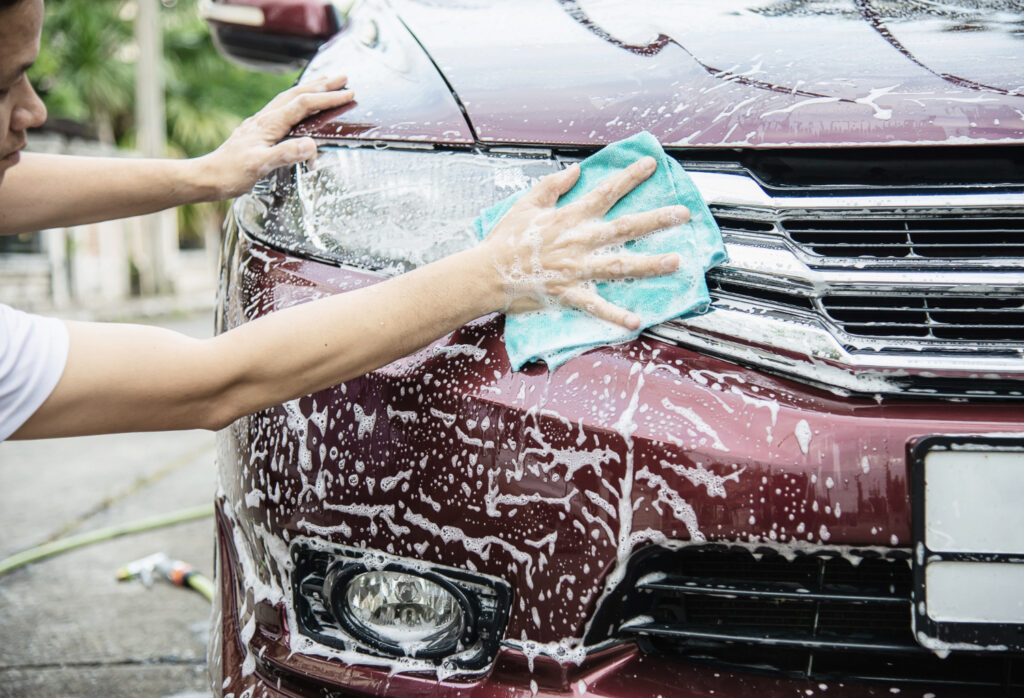
- Professional Detailing: A clean car signals to the appraiser that you cared for the vehicle. Vacuum the carpets, dust the dashboard, wash the exterior, and clean the engine bay. Removing Florida road grime and sand can instantly make a vehicle look years younger.
- Gather Maintenance Records: A thick folder of oil changes, tire rotations, and brake replacements is proof of mechanical health. If you have kept up with routine maintenance, show the receipts!
- Perform Minor Cosmetic Repairs: Fix small windshield chips using your insurance’s glass coverage. Consider paintless dent repair for minor door dings—a single prominent ding can easily shave hundreds off an appraisal, yet costs very little to fix beforehand.
- Highlight Factory Upgrades: Make sure the appraiser knows about premium factory options like upgraded sound systems, panoramic sunroofs, or driver-assist packages, as these add genuine resale value.
What to Expect During a Professional Car Appraisal
When you bring your vehicle in, expect a friendly but thorough examination. The advisor or independent appraiser will start by verifying your documentation (title, registration, and ID).
Next comes the physical inspection. They will use paint depth gauges to check if any body panels have been repainted after an undocumented accident. They will look closely under the hood for signs of oil or coolant leaks and check the tread depth on all four tires.
During the road test, they will listen for suspension squeaks over bumps and ensure the transmission shifts smoothly under acceleration. Finally, they will sit down with their market analysis software to compare your car to live wholesale and retail data in the Fort Lauderdale and Miami metro areas. Within minutes, you will be presented with a clear, transparent valuation report explaining exactly how they arrived at your car’s estimated value.
Frequently Asked Questions About Car Appraisals
What are the main types of vehicle appraisals and their typical costs?
Vehicle appraisals come in several formats depending on your goals. Professional independent vehicle appraisals typically cost between $100 and $750, with higher rates for specialty, classic, or rare exotic models. These independent reports are highly detailed (often exceeding 10 pages) and are used for insurance disputes, estate settlements, or legal divorces. For example, some specialized at-home mobile appraisal services charge between $100 and $250 to deliver a formal, USPAP-compliant report directly to your driveway.
For those simply looking to sell their car quickly for top dollar, a dealership appraisal is the most common route. While some traditional dealerships use high-pressure tactics to chip away at your car’s value, we offer a fast, transparent alternative. You can skip the stress and get a guaranteed, highly competitive cash valuation by checking out our Professional Vehicle Valuation service.
If you want to read more about professional local services, you can explore established networks like Auto Appraisal Group, Inc. or book specialized valuation reports via Classic Auto Appraisal LLC.
How do title brands like salvage or rebuilt affect a car’s value?
A title brand is a permanent designation on a vehicle’s title indicating that the car has undergone significant damage or was deemed a total loss by an insurance company. The most common title brands are:
- Salvage Title: The cost to repair the vehicle exceeded its actual cash value (usually 70% to 90% of its worth).
- Rebuilt Title: A salvage vehicle that has been repaired, inspected by the state, and cleared to return to the road.
- Flood Title: The vehicle suffered severe water damage, which is a common risk in low-lying coastal areas of South Florida.
A salvage or rebuilt title brand typically slashes a car’s appraised value by 20% to 50% compared to an identical vehicle with a clean history. Many retail dealerships will not buy branded-title cars at all because they are incredibly difficult to finance and insure. If you are trying to navigate how a complex vehicle history impacts what you can get for your ride, read our guide on How to Estimate Your Car’s Trade-In Value.
What are the most common pitfalls to avoid during an appraisal?
- Overreliance on a Single Data Source: Assuming your car is worth exactly what one online calculator says is a major mistake. Always look at multiple sources to understand the realistic market range.
- Failing to Verify Vehicle History: Unresolved open recalls or minor fender benders on your vehicle history report can catch you off guard during an appraisal. Pull your own history report beforehand so there are no surprises.
- Hiding Past Damage: Experienced appraisers use professional tools to spot body filler and frame damage instantly. Being dishonest about your vehicle’s history destroys your negotiating credibility.
- Not Understanding the Local Market: Trying to sell a rear-wheel-drive sports car during a rainy Florida winter week might yield slightly lower immediate offers than listing it during prime driving season.
To learn more about navigating the selling process smoothly and avoiding typical industry tricks, check out our article on Demystifying the Process of Selling Your Car.
Conclusion
Understanding the true value of your vehicle shouldn’t feel like a stressful guessing game. While online tools are excellent for a quick ballpark figure, a physical car appraisal is the only way to lock in a guaranteed, accurate price that reflects your car’s actual condition and the local South Florida market.
At Autobon Motors, we have completely reimagined the appraisal process for car owners in Fort Lauderdale, Miami, and throughout Broward County. We are South Florida’s premier car buying service, and we buy used cars, trucks, and SUVs for top dollar.
We don’t believe in long wait times, endless paperwork, or high-pressure sales tactics. Instead, we offer a simple, personalized, and highly efficient four-step process:
- Book Your Appointment Online: Schedule a convenient time that fits your busy schedule.
- Bring Your Car to Us: Visit our welcoming Fort Lauderdale location.
- Get an Instant Offer: One of our expert advisors will conduct a transparent, 15-minute appraisal right in front of you.
- Get Paid on the Spot: Walk out with your guaranteed cash payment immediately.
We back our appraisals with a higher offer guarantee than our competitors and lock your custom price quote for a full three days, giving you complete peace of mind. Ready to experience the easiest car sale of your life? Get the best cash offer for your car in South Florida today!