

Start Your Search for Used Truck Sales With Confidence
Used truck sales give buyers a practical way to find a capable pickup or commercial vehicle without waiting for a new model. The best choice comes down to your work needs, towing or payload requirements, vehicle condition, service history, and the dealer’s transparency about the truck’s past.
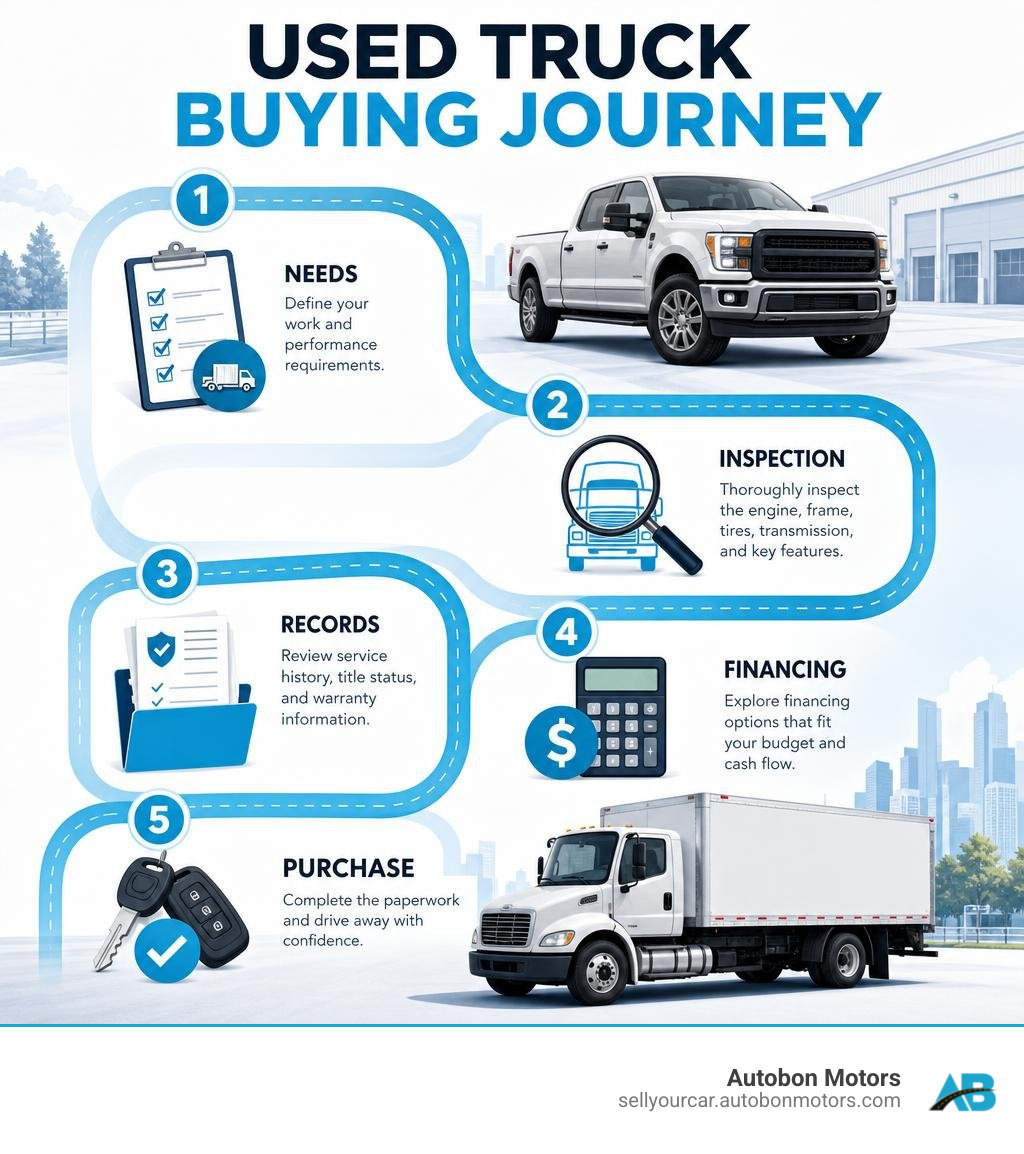
For a quick starting point, focus on these essentials:
- Choose the truck class that fits the job, from a light-duty pickup to a box truck or heavy-duty semi.
- Compare mileage, maintenance records, configuration, and included equipment – not just the asking price.
- Inspect the engine, frame, tires, transmission, and any towing or work-related features.
- Confirm the warranty status, financing terms, title history, and available after-sale support.
A well-chosen pre-owned truck can help a business add capacity, replace an aging vehicle, or handle demanding personal towing and hauling needs. It can also avoid the steepest part of new-vehicle depreciation, provided the buyer takes time to verify condition and records.
At Autobon Motors, the selling side is designed to be local, personal, and simple: book your appointment online, bring your car, receive an instant offer from an advisor, and get paid on the spot. I am Marcos Bravo, and with more than 25 years of experience in South Florida’s high-value vehicle market, I bring a transparent, buyer-focused perspective to used truck sales and vehicle value.
Benefits and Types of Vehicles in Used Truck Sales
Entering used truck sales opens up incredible flexibility for individual drivers, independent contractors, and fleet managers alike. Whether you need a daily driver capable of pulling a boat down to Biscayne Bay or a fleet of heavy-duty haulers to keep regional supply chains moving across South Florida, pre-owned commercial and light-duty trucks offer unparalleled utility per dollar spent.
Purchasing pre-owned allows you to bypass the initial steep drop in market value that brand-new vehicles suffer during their first three years. Beyond raw dollar savings, buying pre-owned gives you immediate access to inventory—eliminating lengthy factory build times or dealer waitlists—so your business can put revenue-generating assets on the road without delay.
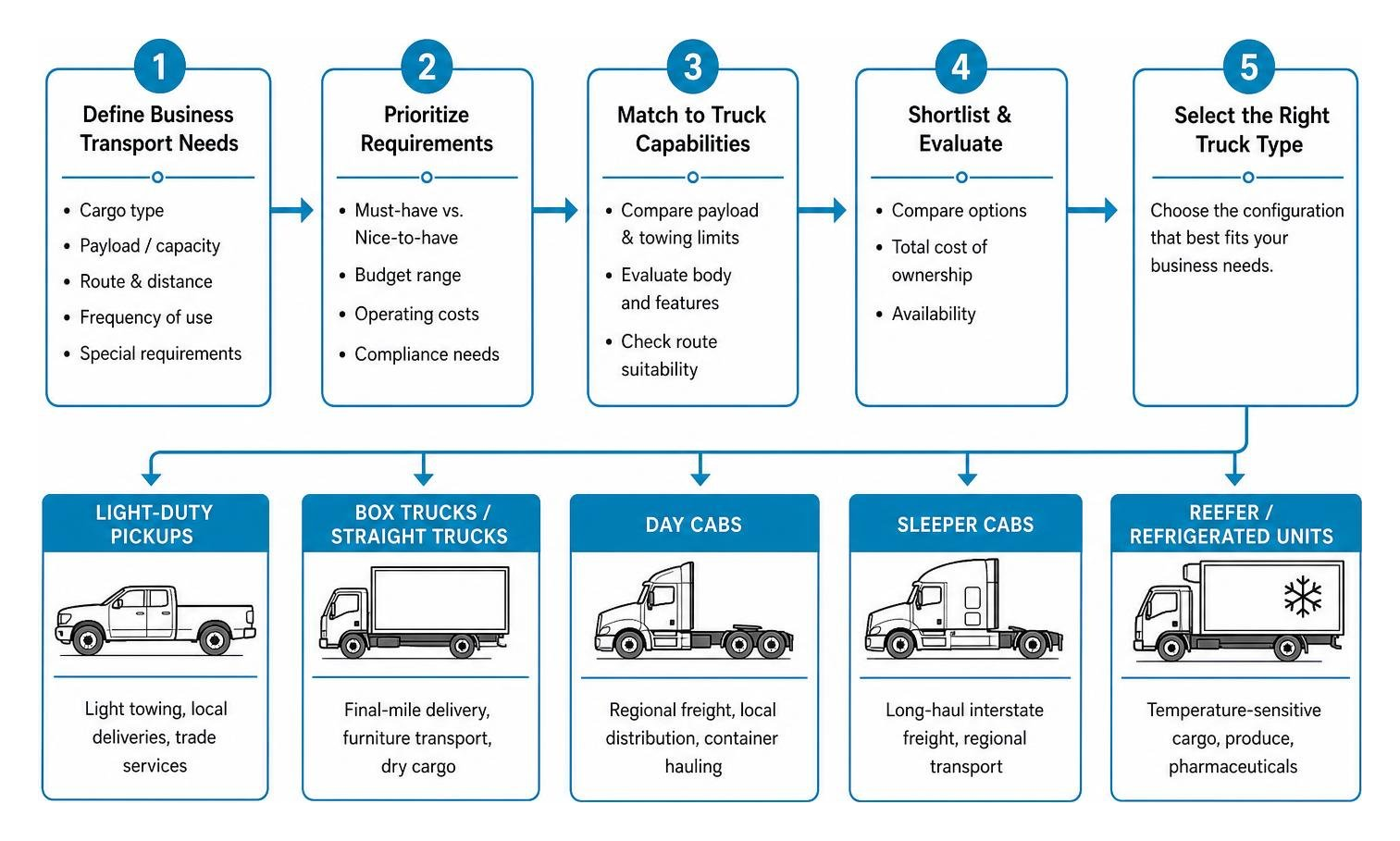
To help you navigate the landscape, here is a breakdown comparing common commercial truck configurations:
| Truck Category | Typical Applications | Key Benefits | Considerations |
|---|---|---|---|
| Light-Duty Pickups | Light towing, local deliveries, trade services | High versatility, easier parking, lower fuel consumption | Limited payload and towing compared to medium/heavy duty |
| Box Trucks / Straight Trucks | Final-mile delivery, furniture transport, dry cargo | Fully enclosed cargo protection, easy ramp or liftgate access | Larger turn radius, specific clearance height requirements |
| Day Cabs | Regional freight, local distribution, container hauling | Maneuverability, higher payload capacity without sleeper weight | No sleeping berth for overnight long-haul routes |
| Sleeper Cabs | Long-haul interstate freight, regional transport | Integrated sleeping quarters, long-distance driver comfort | Higher overall vehicle weight and longer wheelbase |
| Reefer / Refrigerated Units | Temperature-sensitive cargo, produce, pharmaceuticals | Climate-controlled cargo box, high resale demand | Requires dual-engine maintenance (truck engine + reefer unit) |
Key Advantages of Pre-Owned Commercial Vehicles
When evaluating pre-owned commercial assets, the financial protection against rapid vehicle depreciation stands front and center. A new commercial truck can lose a significant portion of its total value in the first 24 to 36 months alone. By choosing a pre-owned model, the previous owner absorbs that initial hit, allowing you to buy an equally capable machine at a far lower acquisition cost.
This lowered barrier to entry directly translates into lower operational overhead. With lower purchase costs, your business capital remains free for operational needs, driver compensation, or technology upgrades. Furthermore, commercial vehicle fleets and small business operators benefit from lower insurance premiums on used trucks compared to brand-new units, protecting your monthly cash flow.
If you are an owner-operator looking to grow from one rig to two, or a local service business expanding across Broward County and Miami, pre-owned inventory lets you stretch your capital to buy two reliable used vehicles for the price of one new model.
Major Vehicle Classes and Configurations
The spectrum of used truck sales spans a wide variety of sizes and specialized body styles tailored to distinct industries:
- Light-Duty Pickups: Perfect for local contractors, towing trailers, and daily errands. Models equipped with heavy-duty towing prep packages (like 5th-wheel or gooseneck hitches) bridging the gap between personal and commercial use.
- Box Trucks & Sprinter Vans: Crucial for urban final-mile logistics. Their enclosed cargo space protects goods from South Florida’s rain showers and extreme heat.
- Day Cabs & Sleeper Cabs: The heavyweights of road transport. Day cabs excel at port transport and short-haul regional routes, while sleeper cabs cater to multi-state long-haul drivers.
- Specialized Work Trucks: Dump trucks, roll-offs, and flatbeds equipped with specialized hydraulics designed for construction, landscaping, and heavy material handling.
- Refrigerated (Reefer) Units: Essential for transporting perishable cargo, featuring insulated boxes paired with dedicated cooling systems.
How to Choose, Inspect, and Evaluate Used Trucks
Selecting the right vehicle in used truck sales requires balancing your operational demands with rigorous physical evaluation. Buying a truck that is underpowered for your cargo leads to costly wear and tear, while overbuying results in wasted fuel and unnecessary operational expenses.

Matching Truck Specifications to Business Needs
Before browsing listings, clearly define your job requirements. Key metrics to consider include:
- Gross Vehicle Weight Rating (GVWR): Ensures your vehicle can legally carry its intended cargo weight without violating Federal or Florida Department of Transportation regulations.
- Towing Capacity and Torque Output: High-torque diesel engines paired with robust automated or manual transmissions are ideal for heavy trailering.
- Axle Configuration: Single-axle setups offer better fuel efficiency and turning radius for light-to-medium loads, while tandem-axle configurations distribute heavy freight across highway routes.
- Duty Cycle & Geography: Stop-and-go driving through downtown Miami requires different engine cooling and brake specs than long stretches of interstate highway driving.
If your operational needs center on everyday utility, contractor work, or light payload towing in South Florida, exploring local pickup truck options will give you a solid baseline for market availability and feature sets.
Rigorous Pre-Purchase Inspection Checklist
Never finalize a deal based solely on glossy photos. A physical and mechanical inspection is non-negotiable when evaluating pre-owned commercial equipment.
Use this checklist during your inspection:
- Engine Diagnostic & Blow-By Test: Check for excessive engine blow-by, oil leaks, and active diagnostic trouble codes (DTCs). Verify that electronic control module (ECM) data matches the odometer reading.
- Aftertreatment System Check: Inspect the Diesel Particulate Filter (DPF) and Selective Catalytic Reduction (SCR) systems for signs of soot buildup or fault codes. Aftertreatment repairs can be costly if overlooked.
- Frame and Suspension Integrity: Examine the frame rails for cracks, non-factory welds, or rust. Inspect air bags, leaf springs, and torque arms for wear.
- Braking and Tires: Check brake pad thickness, drum/rotor condition, and measure tire tread depth across all positions. Uneven tire wear often signals alignment or bushing issues.
- Lifetime Service Records: Demand full service logs. A single-owner vehicle backed by documented lifetime preventive maintenance—such as regular oil sampling and scheduled DOT inspections—is far less risky than an auction vehicle with unknown history. Major operators maintain detailed fleet service records that reveal exactly how well a vehicle was cared for throughout its service life.
Understanding Used Truck Sales Classifications, Warranties, and Financing
Understanding dealer classifications and warranty structures helps protect your investment against unexpected repair costs after delivery.
Evaluating Certified, Verified, and As-Is Used Truck Sales
Dealerships generally categorize pre-owned trucks into three distinct buying tiers:
- Certified Vehicles: Represent the highest tier of pre-owned inventory. These trucks undergo multi-stage OEM or comprehensive dealer inspections, feature low mileage, pass strict cosmetic and mechanical reconditioning, and come with extended warranty coverage.
- Verified Vehicles: Inspected to meet core mechanical standards and full DOT compliance. They typically come with short-term powertrain protections—such as 30-day or 60-day limited warranties—offering peace of mind that the truck is ready to work immediately.
- As-Is Vehicles: Sold in their current mechanical state with zero warranty coverage. While priced lower, the buyer assumes total financial responsibility for any existing or future mechanical failures. These units are often purchased by mechanics or fleets seeking spare parts.
Standard warranty coverage in the commercial sector ranges from standard 60-day powertrain guarantees up to robust 6-month unlimited mileage warranties covering engine, transmission, rears, and aftertreatment components.
Navigating Used Truck Sales Financing and Trade-In Options
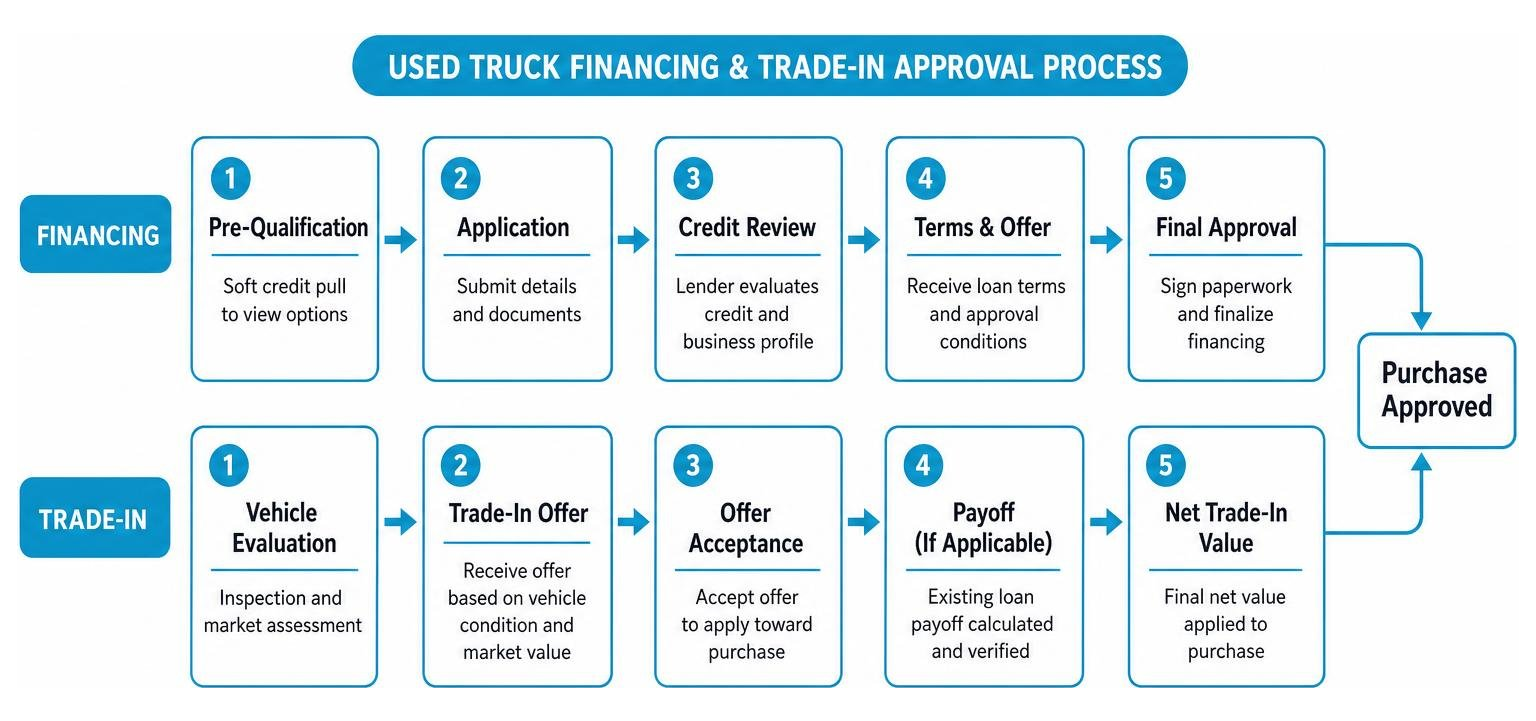
Financing a pre-owned commercial vehicle or light truck involves different criteria than traditional personal car loans. Commercial lenders evaluate driver experience, business stability, route contracts, and personal credit scores.
To protect your credit score during the shopping phase, seek out pre-qualification programs that use soft credit pulls. Soft credit inquiries allow you to view potential loan terms and monthly estimates without impacting your credit score. Many specialized commercial lenders work with owner-operators and first-time buyers, financing hundreds of millions of dollars in equipment annually across tens of thousands of applications.
When financing a commercial purchase, leveraging your existing vehicle’s value can substantially lower your loan principal. Reviewing a comprehensive Car Financing Survival Guide will help you structure loan terms that protect your monthly operating budget.
If you plan to leverage an existing vehicle toward your next truck, reading The Complete Guide To Vehicle Trade In ensures you maximize your trade’s net equity.
Dealer Selection, Price Negotiation, and After-Sale Support
Finding the right truck is only half the equation; partnering with a reputable dealer ensures long-term operational success.

Finding Reliable Dealerships and Comparing Prices
A reliable dealership offers complete transparency, verified inspection reports, and flexible customer incentives. When selecting a commercial truck partner, look for these trust signals:
- Proven Track Record: Choose established dealers with decades of experience, multi-location networks, and thousands of verified high-rating customer reviews.
- Fleet Volume & Multi-Unit Discounts: If you are purchasing multiple vehicles, ask about volume fleet pricing to lower your overall cost per unit.
- Travel & Buyer Incentives: Major regional dealers frequently offer buyer incentives—such as travel reimbursements for out-of-state buyers or doorstep delivery—to make long-distance acquisitions painless.
- Transparent Documentation: Trustworthy sellers readily share ECM downloads, maintenance logs, title histories, and itemized administrative fees upfront.
When negotiating, focus on the total out-of-the-door price rather than just the advertised listing price. Factors like documentation fees, title transfer charges, and pre-delivery inspection services should be clearly detailed in your purchase agreement.
After-Sale Maintenance and Operational Support
Your relationship with a dealer should not end when you drive off the lot. Fleet uptime depends heavily on reliable after-sale support. Leading used truck centers offer comprehensive preventive maintenance plans—such as scheduled fluid analysis, filter changes, and safety checkups—to keep your truck running smoothly.
Access to nationwide network centers, priority service bays, and prompt warranty claims processing ensures that if a component fails, your vehicle returns to service with minimal downtime.
Frequently Asked Questions About Used Truck Sales
What should I inspect first when evaluating a used truck?
Begin with a physical inspection of the frame rails, suspension components, brake pads, and tire tread depth. Follow this with a comprehensive engine diagnostic test to check for active diagnostic codes, excessive engine blow-by, and aftertreatment (DPF/SCR) system health. Finally, request and review the truck’s complete lifetime maintenance history logs to confirm regular service.
What is the difference between certified, verified, and as-is trucks?
Certified trucks undergo rigorous reconditioning, pass multi-point inspections, and include comprehensive extended warranties. Verified trucks meet all safety and DOT compliance standards and usually carry short-term powertrain warranty coverage (such as 30 to 60 days). As-Is trucks come with no warranty protection whatsoever; the buyer assumes full financial responsibility for all repairs.
How can I secure competitive financing for a pre-owned truck?
Start by pre-qualifying through lenders that offer soft credit pulls, which preserve your credit score during initial inquiries. Prepare your business documentation—including tax returns, bank statements, and active hauling contract agreements—to show financial stability. Offering a solid down payment or trading in an existing vehicle will also help secure favorable interest rates and manageable monthly payments.
Conclusion
Navigating used truck sales with confidence comes down to clear preparation: identifying your exact operational requirements, performing thorough pre-purchase inspections, verifying lifetime service records, and choosing a dealer that stands behind its inventory. Whether you are adding a heavy-duty hauler to your logistics fleet or picking up a dependable workhorse for local projects, taking a structured approach protects your capital and keeps your operations moving forward.
When you are ready to sell your current car, truck, or SUV to fund your next vehicle purchase, Autobon Motors offers South Florida’s most personalized, hassle-free vehicle buying process. We cut through dealership bureaucracy to deliver direct, transparent cash offers catered specifically to local South Florida buyers and sellers.
Our straight-forward 4-step process makes selling your vehicle easy:
- Step 01. Book your Appointment Online: Schedule a time that conveniently fits your day.
- Step 02. Bring your Car: Visit our welcoming Fort Lauderdale location.
- Step 03. Get an instant Offer by one of our advisors: Receive a fast, fair, transparent 15-minute appraisal with a 3-day locked price guarantee.
- Step 04. Get Paid on the Spot: Walk away with guaranteed cash in hand immediately.
Ready to unlock top dollar for your current vehicle? Sell Your Vehicle Fast for Cash with Autobon Motors today and start your next commercial journey on solid ground!