What the Kelley Blue Book Trade In Value for Cars Actually Means for South Florida Sellers
If you want a quick answer about the Kelley Blue Book trade in value for cars, here it is:
How to find your KBB trade-in value in 4 steps:
- Go to kbb.com/whats-my-car-worth
- Enter your VIN or license plate number
- Select your car’s condition honestly (most owners overestimate this)
- Enter your ZIP code to get a value adjusted for your local market
Important: KBB trade-in values are estimates, not guaranteed offers. Actual dealer offers will vary based on your car’s real condition, local demand, and the dealer’s reconditioning costs.
Knowing your car’s trade-in value is step one. But getting a fair offer — fast, without lowball quotes or hours of back-and-forth — is a different challenge entirely.
That’s especially true in South Florida, where the market moves quickly and dealer quotes can feel frustratingly inconsistent.
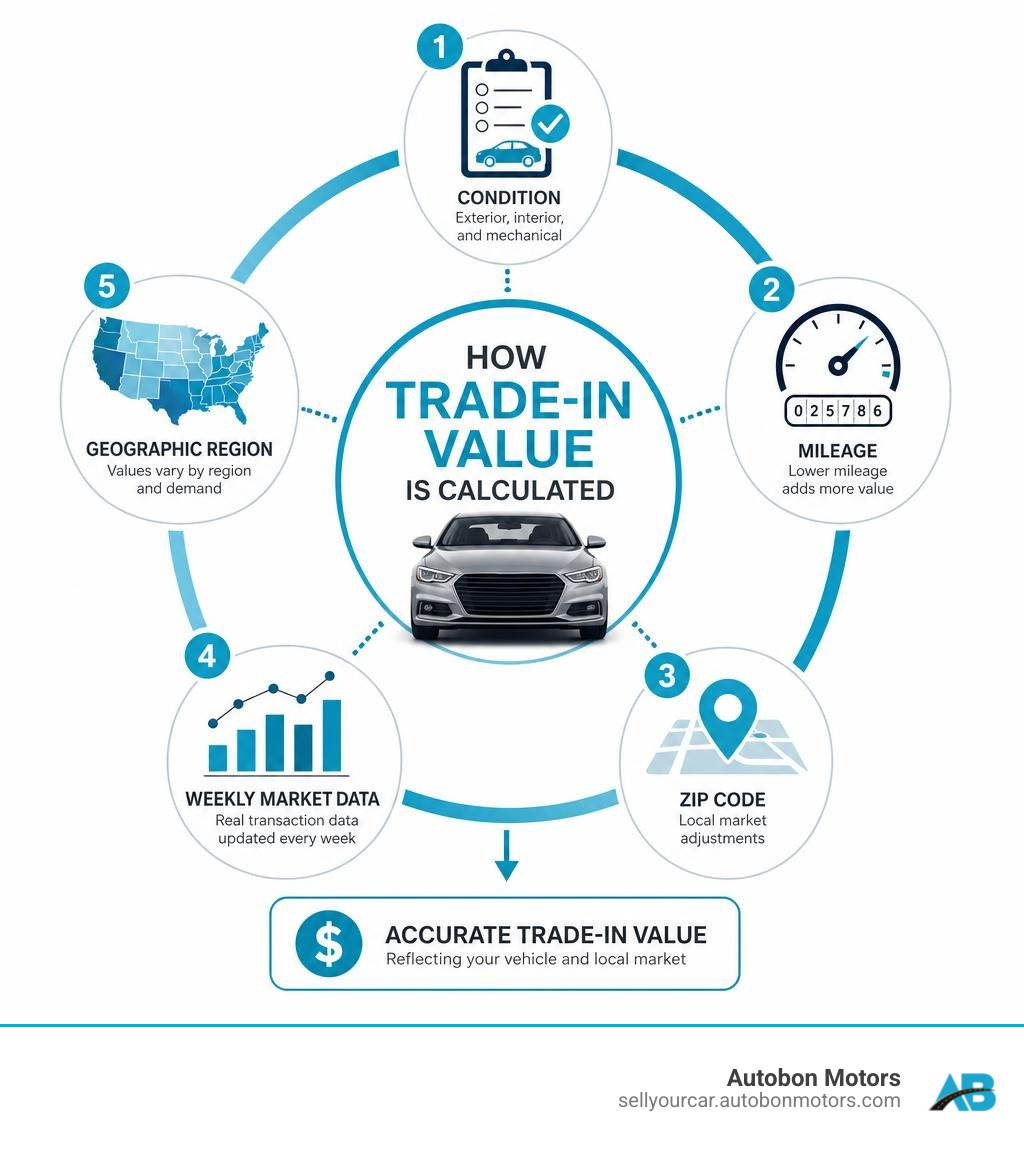
Kelley Blue Book has been the standard reference for vehicle values since 1926. It analyzes hundreds of thousands of real transactions every week across more than 100 geographic regions in the U.S. That’s a lot of data. But data alone doesn’t put money in your pocket.
This guide walks you through 5 practical methods to turn your KBB estimate into the best possible cash outcome — including how to skip the dealership runaround entirely.
I’m Marcos Bravo, a sales and marketing executive with over 25 years of experience in South Florida’s luxury and exotic automotive market, and I’ve helped hundreds of clients navigate the Kelley Blue Book trade in value for cars to make confident, well-informed selling decisions. Whether you’re driving a daily commuter or a high-end vehicle, the principles that get you the most money are the same — and I’ll show you exactly what they are.
Understanding the Kelley Blue Book Trade In Value for Cars
To make the most of your car’s value, we first need to understand how the engine behind Kelley Blue Book actually runs. KBB isn’t just a website; it is an institution with over 90 years of pricing expertise. Since its founding in 1926, it has transitioned from a physical paper book used strictly by car dealers to a massive digital database accessible to anyone with an internet connection.
At its core, KBB calculates the kelley blue book trade in value for cars by pulling massive amounts of real-world transaction data. Every single week, KBB’s algorithms analyze hundreds of thousands of wholesale auction sales, retail dealer transactions, and private party sales. This means the numbers you see on your screen are directly influenced by what real people are paying for similar cars right now.
However, a car’s value isn’t uniform across the United States. A convertible might sit on a lot for months in a snowy Midwestern winter, but here in Fort Lauderdale, Miami, and throughout Broward County, that same convertible is hot property all year round.
To account for this, KBB divides the country into more than 100 distinct geographic regions. When you enter your South Florida ZIP code, the tool automatically adjusts the pricing to reflect local supply and demand. This localized approach is why using trusted pricing tools like the New Car & Used Car Values | Get the Kelley Blue Book Value page is so critical before you ever step foot on a physical dealership lot.
How to Calculate the Kelley Blue Book Trade In Value for Cars
Calculating your car’s KBB trade-in value is relatively simple, but the accuracy of your final number depends entirely on the quality of the information you put into the system.
When you visit the Instant Used Car Value & Trade-In Value | Kelley Blue Book tool, you will be prompted to identify your vehicle. You can do this by entering your Year, Make, Model, and Trim level, but we always recommend using your VIN (Vehicle Identification Number) or your license plate.
Using your VIN is the single best way to ensure the tool captures every factory-installed option your car possesses. If you have premium leather seats, an upgraded sound system, or advanced driver-assist safety packages, the VIN will instantly flag them. Missing these options can cause you to leave significant money on the table.
Beyond the baseline model details, KBB relies heavily on two major variables:
- Mileage: The total miles on your odometer are compared against regional averages for vehicles of the same age. Higher mileage typically results in a lower valuation due to expected wear and tear on mechanical components.
- Vehicle Options: Factory-installed upgrades add value, but be aware that aftermarket modifications (like custom rims, non-factory exhaust systems, or aftermarket stereos) are generally excluded from KBB’s calculations because they do not have a consistent, predictable value in the wholesale marketplace.
Why the Kelley Blue Book Trade In Value for Cars Fluctuates
If you checked your car’s value last month and check it again today, you might notice the number has shifted. This is completely normal. In June 2026, we are seeing unique shifts in the automotive landscape, and car valuations are highly sensitive to real-time market dynamics.
The primary reasons for these fluctuations include:
- Market Demand: If a specific type of vehicle (such as fuel-efficient hybrids or compact SUVs) suddenly becomes highly popular in South Florida, the trade-in value will climb. Conversely, if the market becomes oversaturated with a particular model, values will dip.
- Seasonal Trends: Florida weather is beautiful, but regional buying habits still shift with the seasons. Convertibles and open-top SUVs often see a bump in demand during the cooler winter and spring months, while heavy-duty trucks might see steady demand year-round.
- Depreciation Rates: Cars are depreciating assets. As a vehicle gets older and accumulates more miles, its value naturally trends downward. KBB’s weekly updates ensure that this natural depreciation is factored in gradually rather than all at once.
5 Methods to Maximize Your Car’s Trade-In Value
Now that you know how the system works, let’s look at how to use this knowledge to your advantage. Getting the highest possible trade-in value requires strategy, preparation, and a clear understanding of your options.

Before you head to a dealership or request an online appraisal, we recommend comparing your options side-by-side. While KBB provides a fantastic baseline, a direct cash offer from a specialized local car buying service can often yield a faster, more convenient, and more lucrative result.
| Feature / Benefit | Standard KBB Trade-In Value | Direct Cash Offer (Autobon Motors) |
|---|---|---|
| What is it? | An estimated range of what a dealer might offer. | A guaranteed, locked-in price to buy your car today. |
| How long is it valid? | Fluctuates weekly based on market data. | Locked in for 3 full days so you can think it over. |
| Appraisal Time | Self-input online, followed by dealer inspection. | 15-minute professional on-site appraisal. |
| Payment Speed | Applied as credit toward another vehicle purchase. | Fast, guaranteed cash paid on the spot. |
| Pressure Level | High (dealers want you to buy a new car from them). | Zero pressure. We buy your car even if you don’t buy ours. |
Let’s explore the five guaranteed methods to maximize your car’s value.
Method 1: Perform an Honest Condition Assessment
The biggest mistake we see car owners make is overestimating their vehicle’s condition. It is completely natural to love your car and overlook that tiny door ding or the slight stain on the passenger seat. However, being unrealistic about your car’s condition will only lead to disappointment when you get a physical appraisal.
KBB categorizes vehicles into four condition tiers: Excellent, Very Good, Good, and Fair.
Here is a reality check: Only about 3% of all valued vehicles actually qualify as “Excellent.” An Excellent vehicle looks like it belongs on a showroom floor, has zero cosmetic or mechanical flaws, possesses a clean title history, and has matching, high-quality tires with plenty of tread.
Most well-maintained daily drivers fall into the “Good” or “Very Good” categories. If you are unsure, take KBB’s interactive condition quiz.
Additionally, be prepared for how specific issues affect your valuation:
- Broken Equipment: If your car has air conditioning but the compressor is broken and blows warm air, you must disclose this. Dealers will deduct the estimated cost of repairs directly from your trade-in offer.
- Salvage Titles: If your vehicle has a salvaged or reconstructed title due to a major accident or flood, it has a permanent negative impact on its value. The industry rule of thumb is to deduct 20% to 40% of the standard Blue Book value.
Method 2: Track Weekly Regional Market Updates
Because KBB updates its database at least once a week, timing your sale can make a noticeable difference. If you are planning to sell your car in the near future, start tracking its value weekly on the Used Cars & Used Car Prices | Kelley Blue Book page.
By monitoring the trend line, you can spot when local demand in South Florida is peaking. If you notice the value starting to dip over a two-week period, it may be a sign that local wholesale inventory is rising, and it might be time to pull the trigger on your sale before depreciation takes a larger bite. Always ensure your ZIP code is entered correctly to capture the localized pricing trends of Broward and Miami-Dade counties.
Method 3: Understand Online Estimates vs. Direct Cash Offers
It is vital to distinguish between a KBB Trade-In Range and a Direct Cash Offer.
The Trade-In Range you see online is an estimated spectrum of what dealers in your area are paying on average for similar cars. It is a guide, not a contract. When you bring that printout to a traditional dealership, the used car manager will perform a physical inspection. They will look for hidden paintwork, check the brake pads, plug a scanner into the onboard computer, and estimate their own reconditioning costs.
Every scratch they have to buff out, every tire they have to replace, and every detail service they have to perform costs them money. They will deduct these anticipated expenses from your offer.
On the other hand, a Direct Cash Offer (like the ones we provide at Autobon Motors) is a firm, guaranteed price to buy your car outright. There is no guesswork, no range, and no obligation to buy a replacement vehicle from us.
Method 4: Complete Basic Maintenance and Detailing
First impressions matter just as much for cars as they do for job interviews. A dirty, cluttered car sends a subconscious signal to an appraiser that the vehicle may have been neglected mechanically as well.
To maximize your car’s curb appeal:
- Clean It Thoroughly: Wash the exterior, vacuum the footwells, wipe down the dashboard, and clean the inside of the windows. A clean car interior makes the vehicle feel years newer.
- Gather Your Service Records: If you have performed regular oil changes, tire rotations, and scheduled maintenance, keep the receipts. Showing a documented history of care proves you looked after the vehicle, which can help justify a higher-tier condition rating.
- Fix the Small Stuff: You don’t need to spend thousands on major repairs, but replacing a burnt-out headlight bulb, topping off fluids, or fixing a loose piece of plastic trim can prevent an appraiser from marking down your car’s condition.
Method 5: Secure a Guaranteed Local Cash Offer with Autobon Motors
If you want to skip the endless negotiations, the lowball dealer trade-in offers, and the stress of trying to sell your car privately online, we have designed the perfect solution. At Autobon Motors, we are South Florida’s premier car buying service, and we make getting top dollar for your vehicle incredibly simple.
Our unique selling proposition is simple: we guarantee a higher offer than our competitors, featuring a lightning-fast process and a 3-day locked-in price.
Here is exactly how our stress-free process works:
- Book your Appointment Online: Visit our Get a guaranteed cash offer today page and schedule a time that works best for you.
- Bring your Car: Drive your vehicle to our convenient Fort Lauderdale location.
- Get an Instant Offer: One of our expert advisors will perform a transparent, 15-minute physical appraisal of your vehicle.
- Get Paid on the Spot: If you accept our guaranteed offer, we handle all the paperwork and pay you right then and there.
We buy used cars, trucks, and SUVs for top dollar with fast, fair, and transparent offers. No pressure, no games — just a straightforward transaction designed to put the most money in your pocket.
Frequently Asked Questions About Car Trade-In Values
To help you navigate the process like a pro, we have compiled the answers to some of the most common questions South Florida car sellers ask us.
How accurate are KBB trade-in values compared to actual cash offers?
KBB trade-in values are highly accurate reflections of historical market data, but they cannot predict real-time, local dealer inventory needs. If a local dealership already has five identical models of your car sitting on their lot, they will likely offer you less than the KBB average because they do not need another one.
Additionally, online tools cannot see physical wear, smell the interior, or hear the engine run. For the most accurate breakdown of how condition impacts real-world pricing, you can review the Kelley Blue Book | FAQ page | My Car’s Value guidelines. An online estimate is a helpful starting point, but a physical appraisal is what determines your actual payout.
How does a salvage title affect my car’s trade-in value?
A salvage title indicates that an insurance company previously declared the vehicle a total loss (usually due to severe accident damage, flooding, or theft recovery) and the cost of repairs exceeded the car’s actual value.
Because salvage vehicles carry higher safety risks and are more difficult to insure, they suffer a permanent, severe drop in value. You should expect a deduction of 20% to 40% compared to a clean-title vehicle in similar condition. Many traditional dealerships will refuse to take salvage vehicles as trade-ins at all, making specialized direct buyers your best option.
Can I get a trade-in value for a car older than 21 years?
KBB only provides automated online trade-in and private party values for vehicles up to 21 years old. For cars older than this, transaction data becomes too rare and inconsistent for an algorithm to generate an accurate valuation.
If you own a classic, vintage, or highly collectible car older than 21 years, you will need to seek a specialized private appraisal or look at historical auction results to determine its true market value.
Conclusion
Determining the kelley blue book trade in value for cars is the smartest way to start your car-selling journey. It gives you a realistic benchmark, protects you from unfair offers, and helps you understand the local market in Fort Lauderdale and the greater South Florida area.
However, an online estimate is only paper until someone writes you a check. To get the absolute most out of your vehicle, you need to present it in its best light, understand the difference between online estimates and real physical appraisals, and work with a buyer who values your time.
If you are ready to turn your car’s value into real, guaranteed cash today, we are here to help. Skip the dealership hassle, avoid the lowball trade-in ranges, and experience a transparent, customer-first process. Get a guaranteed cash offer today from us at Autobon Motors and see just how simple selling your car can be!