

How to Approach Used Car Financing
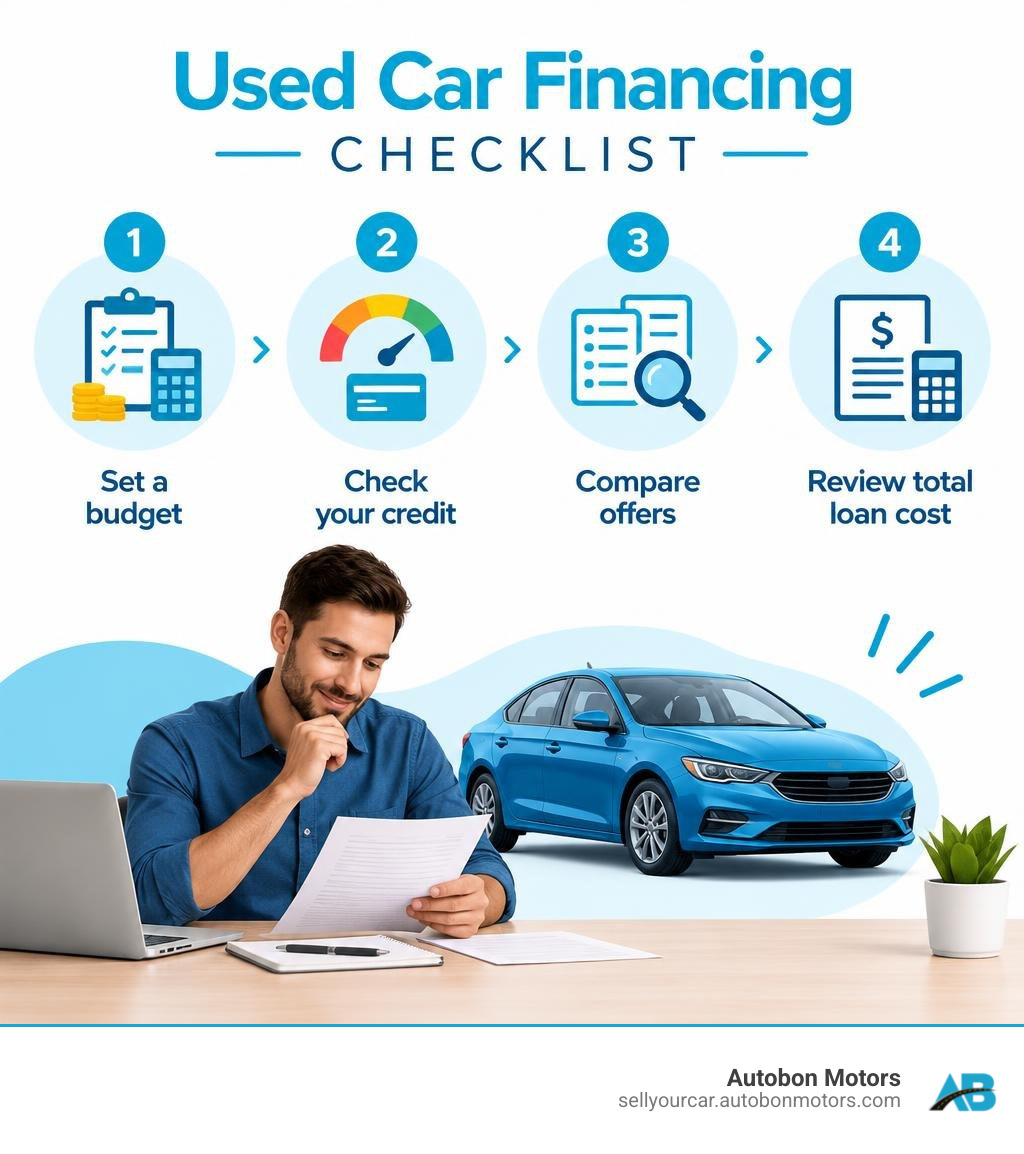
Start with your budget, not a monthly payment offer. Check your credit, decide what you can put down, and get pre-approved by more than one lender. Then compare the APR, loan term, fees, and total amount you would repay. Choose a payment that still leaves room for insurance, maintenance, and repairs.
I’m Marcos Bravo, and I’ve spent more than 25 years helping South Florida customers navigate vehicle purchases, leasing, and used car financing. At Autobon Motors, I bring that experience to a more personal, less bureaucratic process for local buyers and sellers.
Understanding Your Options for Used Car Financing
Navigating auto loans can feel overwhelming, but financing is simply borrowing capital that you pay back over time with interest. When shopping for a pre-owned vehicle, your loan structure directly determines your overall cost and how much equity you build in the car.
Lenders assess risk using metrics like your loan-to-value (LTV) ratio, which measures the amount borrowed against the true market value of the vehicle. Lower LTV ratios mean less risk for the lender and better borrowing terms for you. Understanding whether your loan is backed by collateral is the first step in setting up a healthy monthly payment.
| Loan Feature | Secured Auto Loan | Unsecured Auto Loan |
|---|---|---|
| Collateral Required | Yes (the purchased vehicle) | No collateral required |
| Interest Rates (APR) | Generally lower (often starting under 6%) | Typically higher (credit-dependent) |
| Credit Requirements | Flexible across credit tiers | Strict (good to excellent credit needed) |
| Vehicle Restrictions | Age and mileage limits often apply | No vehicle appraisal or restriction |
| Default Risk | Vehicle repossession | Credit score damage and collections |
Secured vs. Unsecured Auto Loans
The vast majority of pre-owned vehicle loans are secured loans. With a secured loan, the vehicle itself acts as collateral. If you fall behind on payments, the lender holds the right to repossess the car to recoup their funds. Because the lender’s financial risk is minimized by holding the vehicle title, secured auto loans generally offer lower interest rates and flexible qualification standards.
An unsecured auto loan does not require you to put the vehicle up as collateral. Instead, approval relies entirely on your personal creditworthiness, income, and debt-to-income ratio. The lender cannot immediately repossess the car if you default, which makes the arrangement riskier for them. Consequently, unsecured loans typically demand higher credit scores and carry higher APRs. However, they provide the distinct advantage of granting you immediate title ownership with zero mileage or age limits on the car you purchase.
Comparing Loan Sources for Used Car Financing
Finding the right lender requires comparing the main lending channels:
- Credit Unions: Member-owned non-profit institutions often provide some of the lowest interest rates and friendliest terms for used car purchases. Exploring the best local auto loans through local credit unions can yield significant interest savings over your loan term.
- Traditional Banks: Large commercial institutions provide reliable service, established digital platforms, and loyalty rate discounts if you already have deposit accounts. Reading a guide on how to evaluate bank finance cars for sale helps clarify what commercial banking underwriters look for.
- Online Lenders: Digital-first lenders offer rapid pre-qualification, fast approvals, and convenient mobile interfaces, making it easy to compare offers from home.
- Dealership Financing: Dealership finance departments work with broad networks of captive lenders and financial institutions to secure funding on the spot, streamlining the paperwork into a single visit.
Used vs. New Car Financing Differences
Why do pre-owned vehicles carry different interest rates than brand-new showroom models? According to industry research on used car loans, the average interest rate on a used car loan is roughly double the rate seen on new vehicles.
New cars benefit from lower rates because their value is predictable, warranty coverage is complete, and manufacturers often subsidize interest rates through promotional incentives. Pre-owned vehicles have already experienced the steepest portion of their depreciation curve. While this makes their overall purchase price and loan balance significantly smaller, lenders charge a higher APR on used vehicles to hedge against uncertain resale values, mechanical wear, and shorter remaining asset lifespans.
How Interest Rates, Credit Scores, and Terms Impact Loan Costs

Understanding the relationship between your credit score, interest rate, and repayment timeline is essential to avoid overpaying. The average credit score for a used vehicle financing approval sits around 691, with an average loan balance of $26,468 repaid over 67.2 months.
| Credit Tier | Credit Score Range | Typical Used Car APR | Estimated Monthly Payment ($20,000 Loan / 60 Mos.) | Total Interest Paid |
|---|---|---|---|---|
| Super Prime | 781 – 850 | ~7.70% | $403 | $4,160 |
| Prime | 661 – 780 | ~9.95% | $424 | $5,466 |
| Near Prime | 601 – 660 | ~14.46% | $470 | $8,209 |
| Subprime | 501 – 600 | ~19.38% | $523 | $11,372 |
| Deep Subprime | 300 – 500 | ~21.85% | $551 | $13,040 |
How Credit Scores Impact Used Car Financing Rates
Your credit profile is the primary factor determining your annual percentage rate (APR). Credit bureaus compile your payment history, credit utilization, and debt-to-income ratio into a single score that tells underwriters how likely you are to repay the debt.
A borrower in the super-prime bracket can secure rates near 7.70%, while a borrower facing credit challenges in deep subprime territory might see rates exceeding 21%. Over a five-year loan, that rate difference can cost thousands of extra dollars in pure interest expense. Even a single tier improvement in your credit score can save you substantial cash each month.
Down Payment Size and Loan Term Length
Your down payment directly reduces the principal balance you need to finance. Providing a down payment of 10% to 20% lowers your monthly obligation, reduces lender risk, and shields you from negative equity—the uncomfortable situation where you owe more on the vehicle than it is worth on the market.
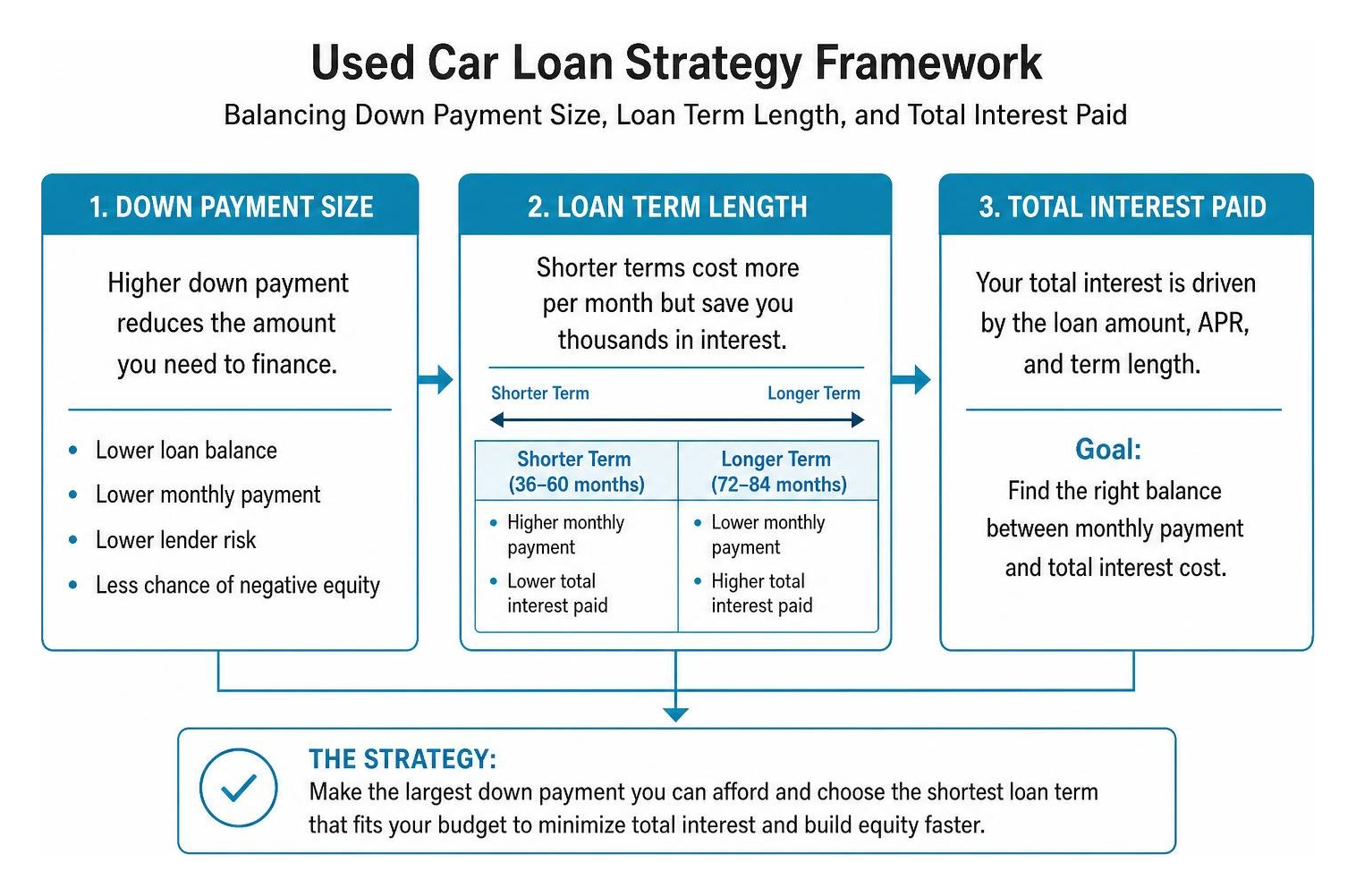
Balancing your loan term is just as critical. Longer loan terms (such as 72 or 84 months) lower your monthly payment, but they drastically increase the total interest paid over the life of the loan. Our car financing survival guide outlines how choosing the shortest term you can comfortably afford keeps your total interest costs low and builds equity faster.
Associated Loan Fees and Prepayment Penalties
Before signing any financing agreement, examine the full amortization schedule and loan disclosures for extra costs:
- Documentation and Processing Fees: Charges covering the administrative costs of preparing title, registration, and contract paperwork.
- Prepayment Penalties: Some lenders charge a penalty fee if you pay off your loan early, ensuring they collect a minimum amount of interest. Always verify that your loan agreement allows fee-free early payoff.
- Late Payment Charges: Defined penalty fees applied when monthly installments arrive after the designated grace period.
Step-by-Step Process to Qualify for the Best Loan Terms
Getting approved for favorable loan terms is straightforward when you take a structured approach before visiting a showroom.
Step 1: Check Credit and Set a Realistic Budget
Pull your credit reports from major credit bureaus to check for errors or outdated collection accounts. Use a reverse loan calculator to establish a target vehicle price based on your total monthly budget, leaving room for auto insurance, fuel, and routine maintenance. Reviewing the basic auto loan application steps ensures you have your proof of income, residence, and employment ready before you apply.
Step 2: Compare Lenders and Get Pre-Approved
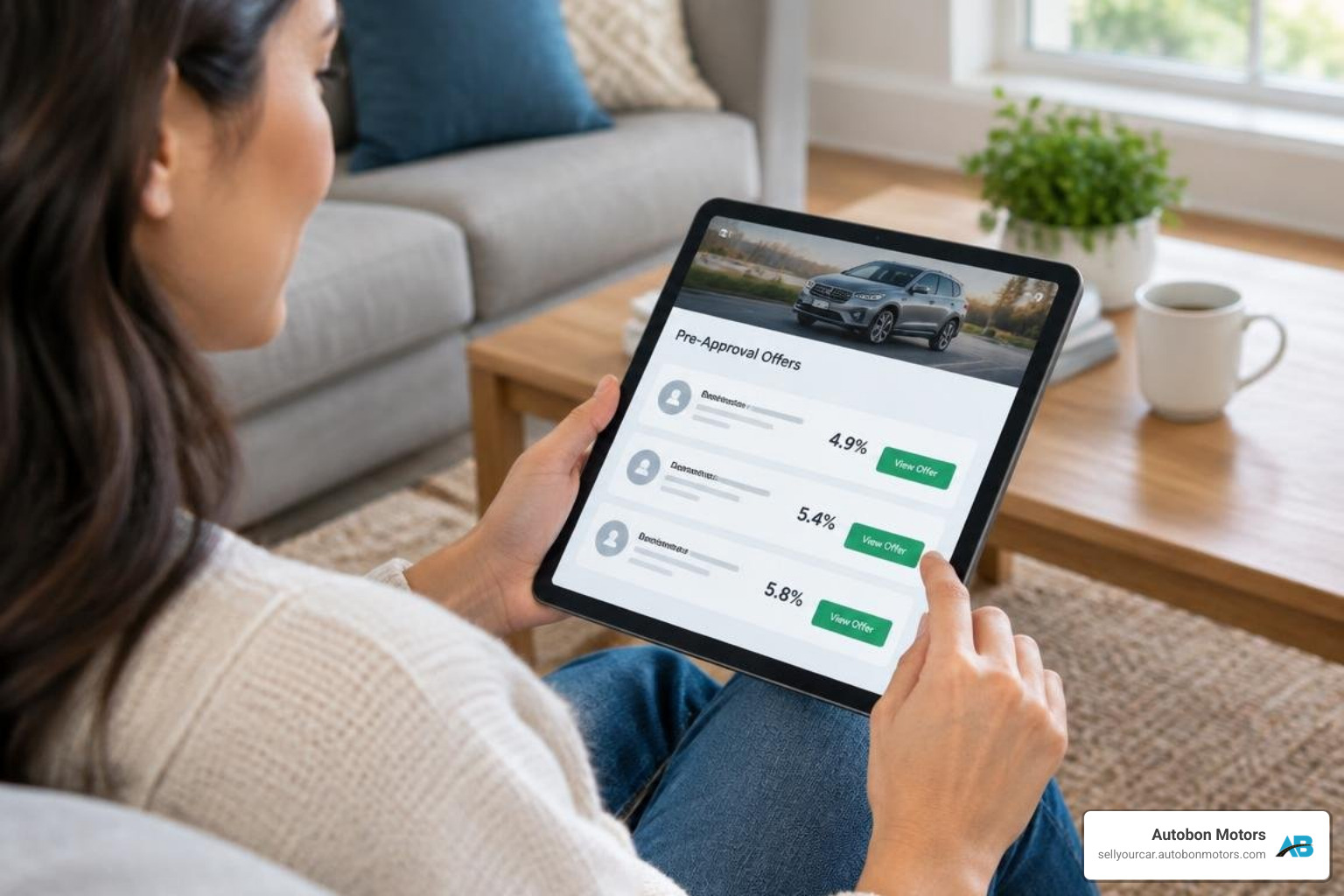
Apply for pre-approvals from multiple lenders, including credit unions, regional banks, and online lending platforms. When rate shopping, submit your applications within a 14- to 45-day window. Credit scoring models recognize this pattern as comparison shopping for a single auto loan and group multiple hard inquiries together to minimize any impact on your credit score.
Platforms offering comparisons on used car loan rates and approval options make it simple to evaluate rate locks, loan terms, and total borrowing costs side by side. Following a clear guide on how to apply for an auto loan helps you leverage these pre-approval offers to negotiate terms with confidence.
Step 3: Satisfy Insurance and Vehicle Requirements
Lenders holding the title on a financed vehicle require full insurance coverage to protect their financial stake. This standard includes:
- Collision Coverage: Pays for damage to your vehicle resulting from an accident with another vehicle or object.
- Comprehensive Coverage: Covers non-collision incidents such as theft, vandalism, windshield damage, or weather-related events.
- Guaranteed Asset Protection (GAP) Insurance: Covers the financial gap between your vehicle’s actual cash value and the remaining balance on your loan if the car is declared a total loss.
Frequently Asked Questions About Used Auto Loans
Do government infrastructure programs like TIFIA finance personal used cars?
No. Federal programs like the Transportation Infrastructure Finance and Innovation Act (TIFIA) and Railroad Rehabilitation & Improvement Financing (RRIF) are designed exclusively for large-scale public transportation projects, state highways, and municipal infrastructure. They do not offer consumer loans, credit assistance, or subsidies for individual used car purchases.
Can you get 0% APR financing on a pre-owned vehicle?
Zero-percent APR financing offers are generally reserved for new vehicles through manufacturer-backed captive lenders seeking to move current inventory. However, rare exceptions occur on certified pre-owned (CPO) vehicles during seasonal dealer sales events. Qualifying for these promotional rates requires an exceptional credit score and low debt-to-income ratio.
What is the minimum credit score required for used car approval?
While a score of 670 or higher opens up the most competitive interest rates, there is no universal minimum credit score required to finance a used car. Many specialized subprime lenders work with credit scores below 580, provided you can verify stable income, maintain steady employment, provide a meaningful down payment, or add a creditworthy cosigner.
Conclusion
Securing the best terms on your next vehicle comes down to preparation: checking your credit profile, saving a healthy cash down payment, and picking a repayment term that balances monthly affordability with total interest costs. Knowing the value of your current vehicle’s trade-in equity also gives you substantial leverage when structuring your next deal.
At Autobon Motors, we believe selling your current car should be simple, transparent, and completely stress-free. Unlike large corporate chains with layers of red tape, our local team provides a more convenient, personalized, and less bureaucratic experience tailored specifically to South Florida drivers.
Our car selling process takes just four straightforward steps:
- Book your Appointment Online
- Bring your Car
- Get an instant Offer by one of our advisors
- Get Paid on the Spot
Whether you want to maximize your trade-in equity or browse quality new and used vehicles for your next daily driver, visit our Fort Lauderdale location today and experience a better way to buy and sell.